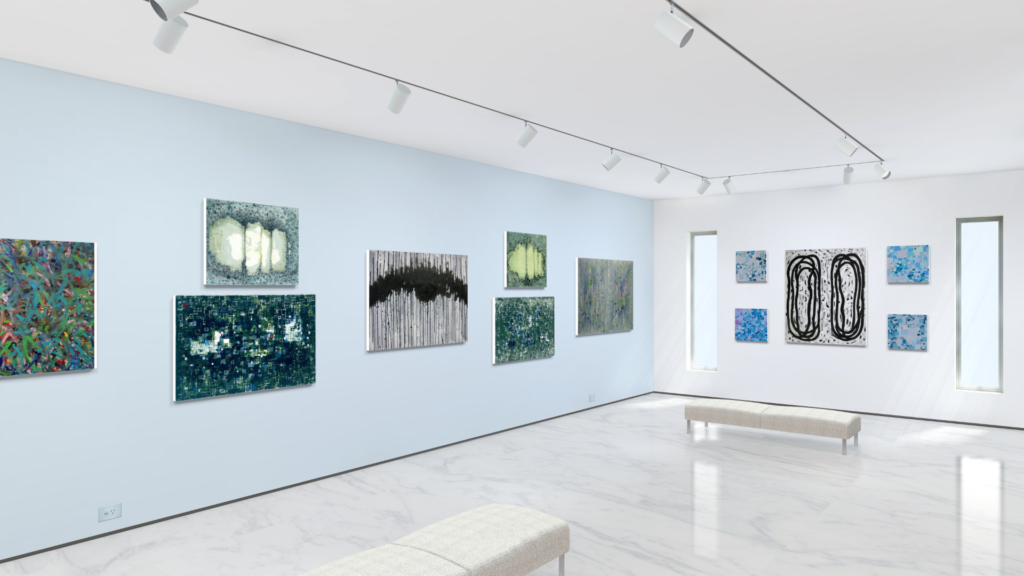
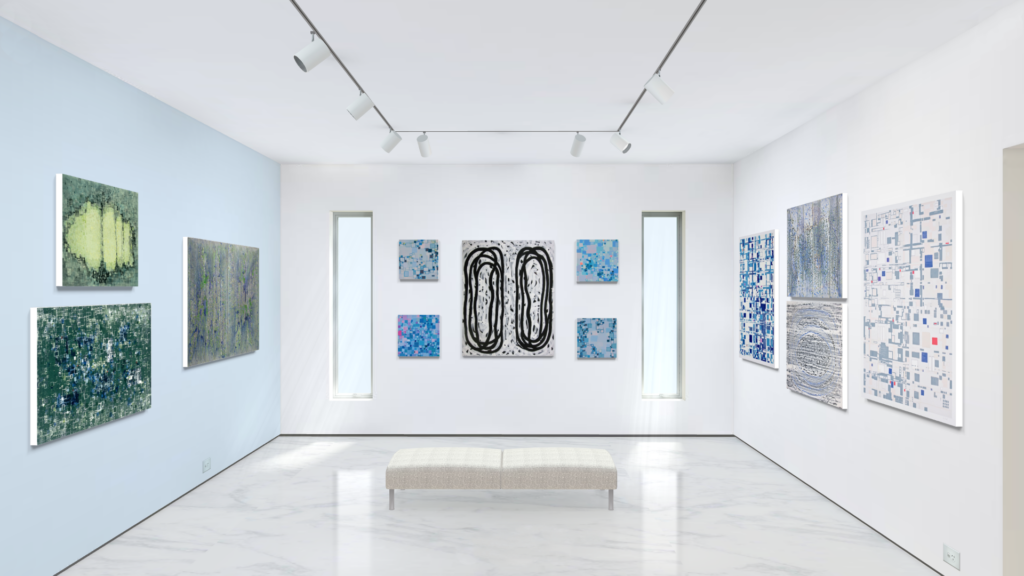
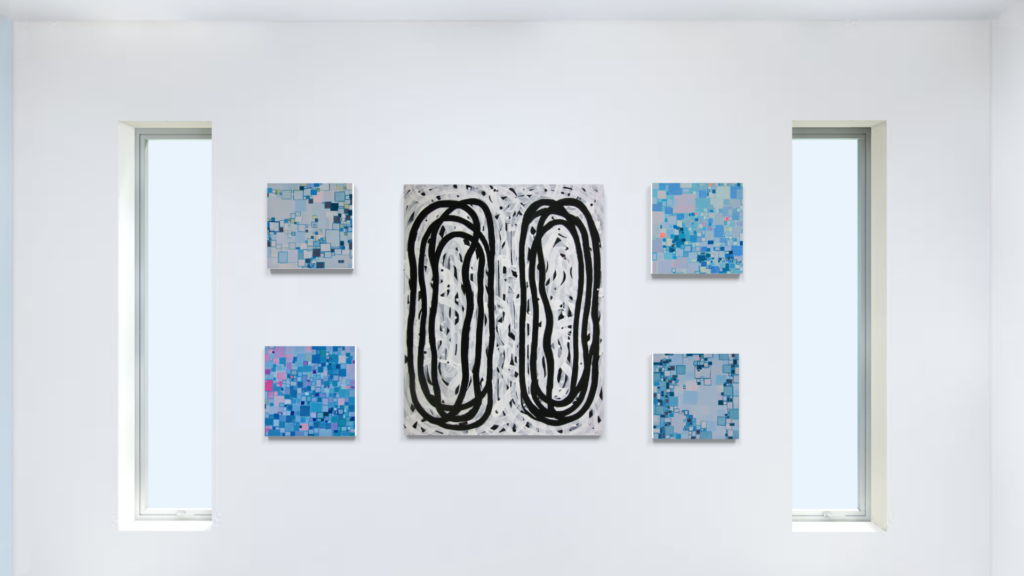
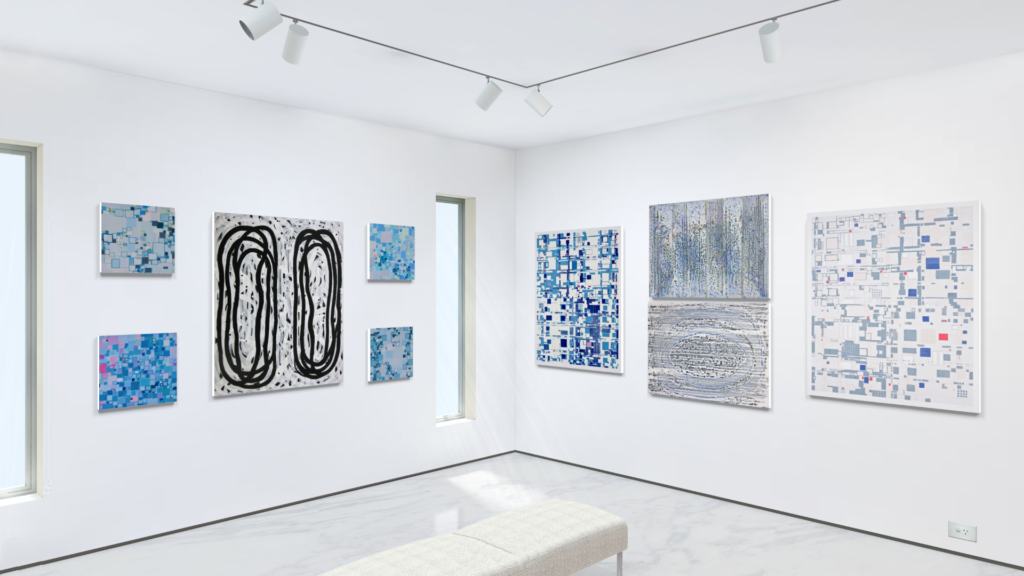
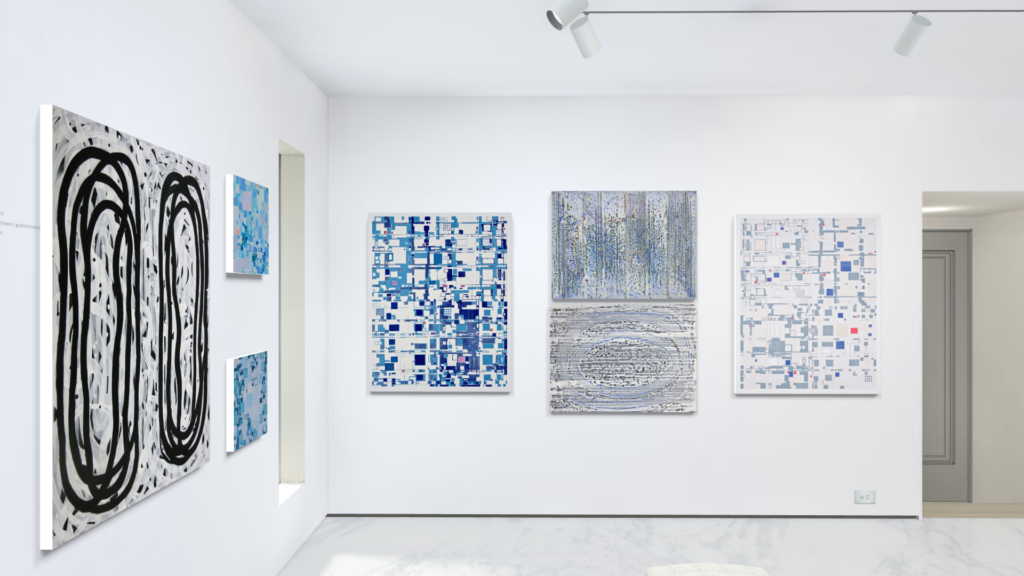
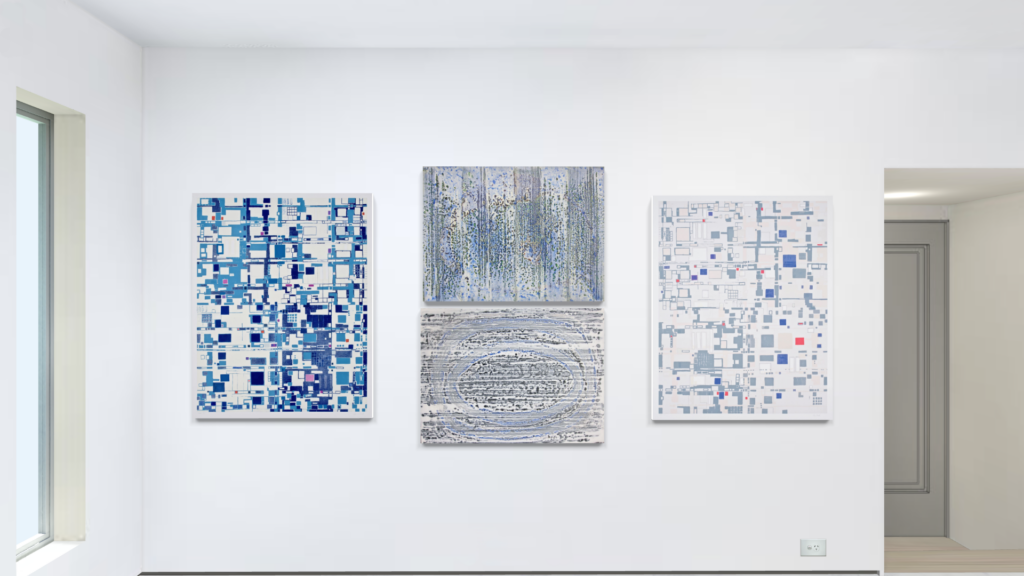
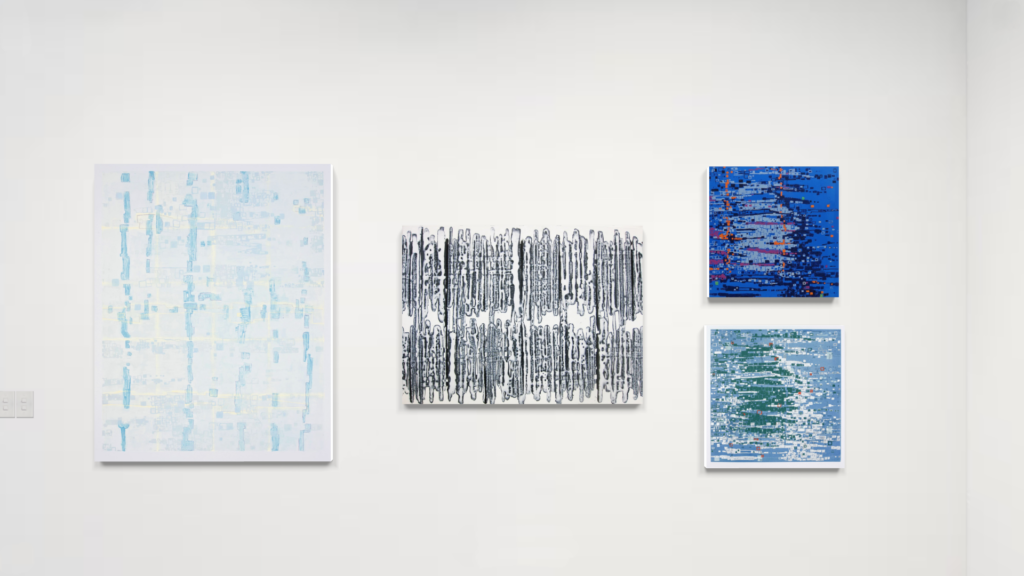
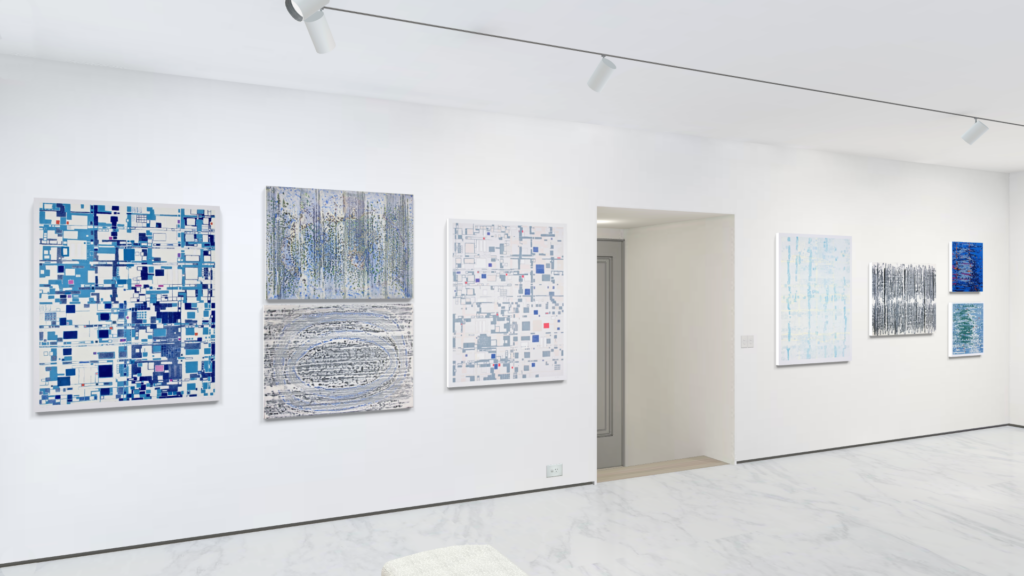
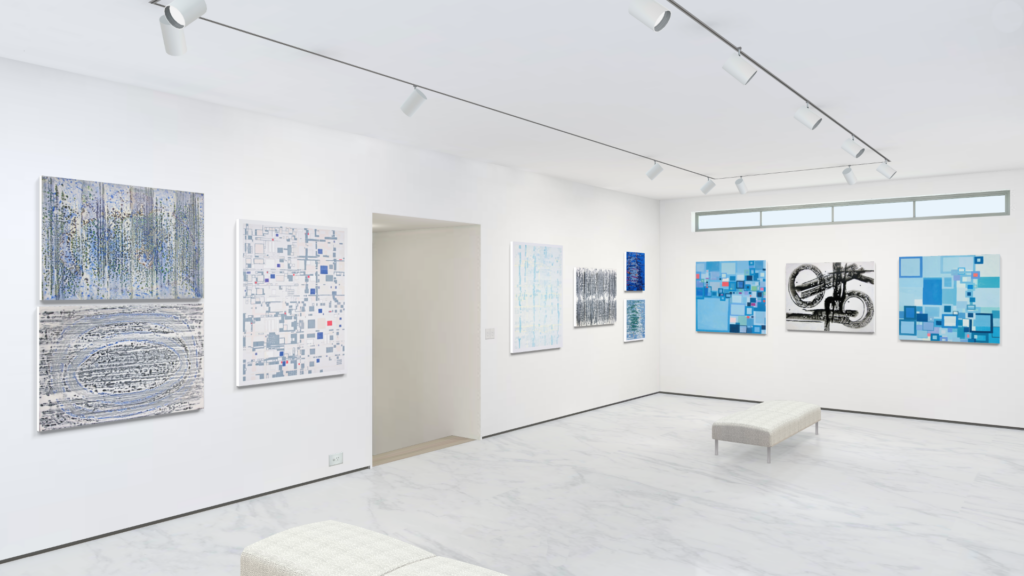
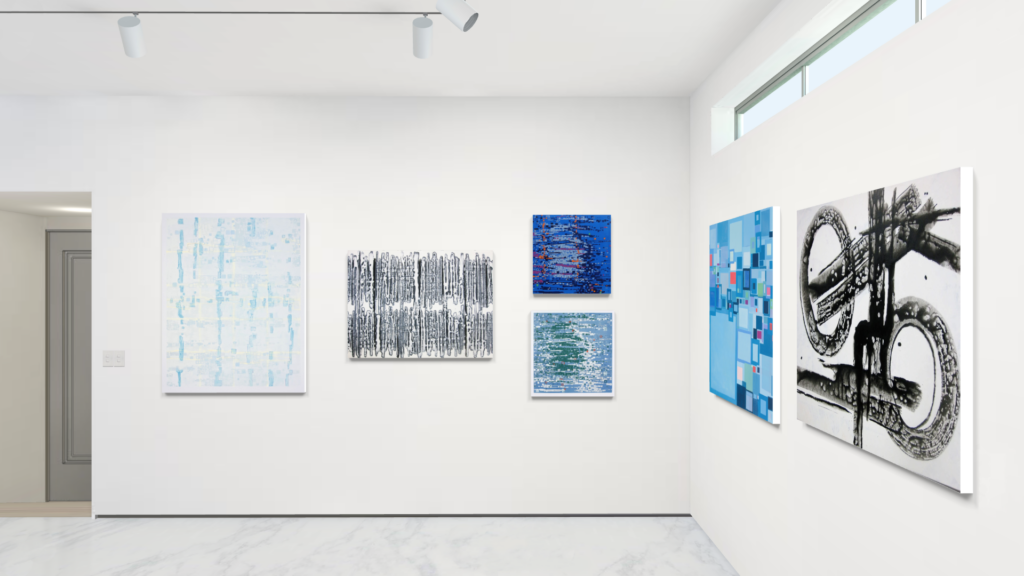
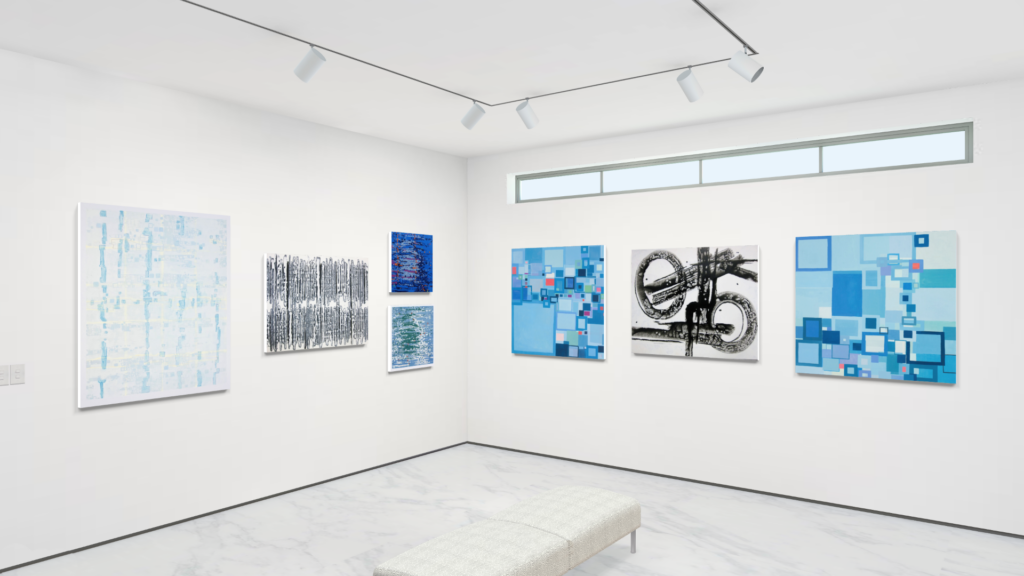
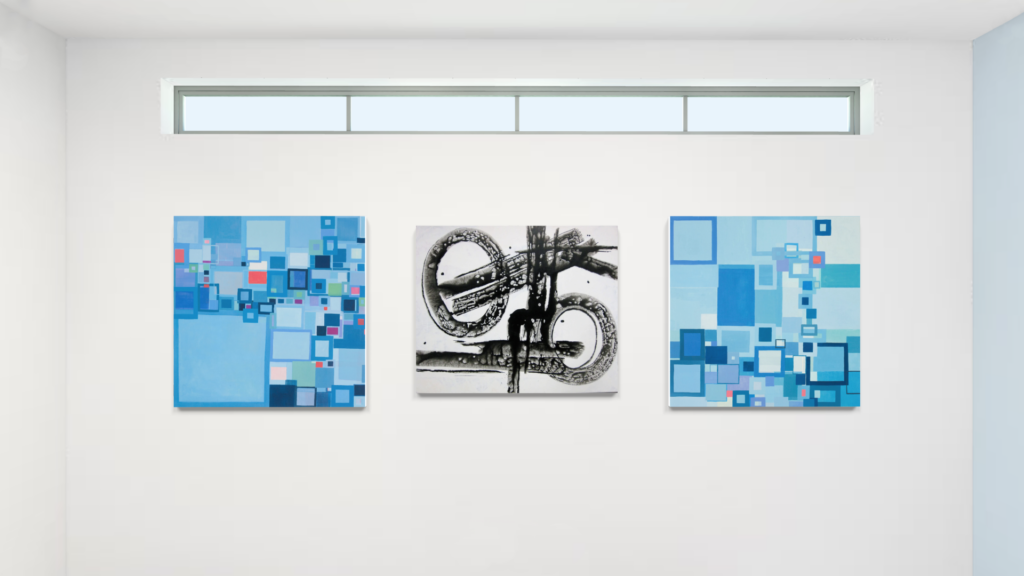
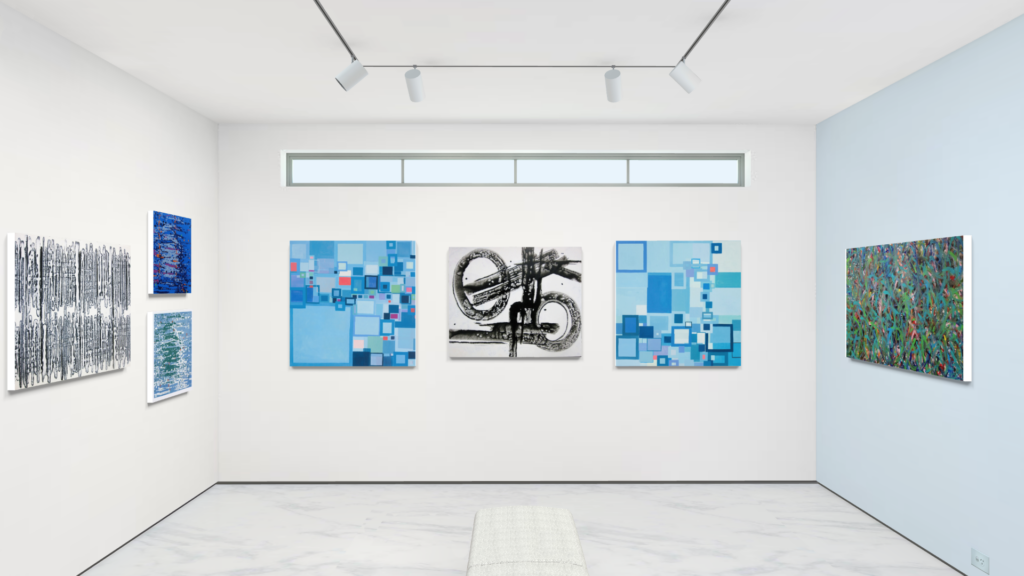
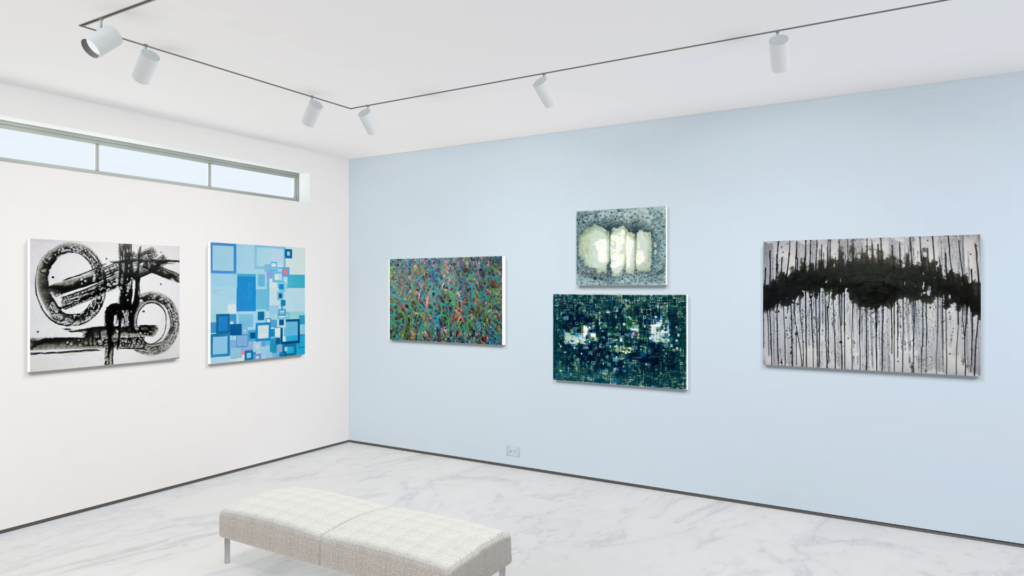
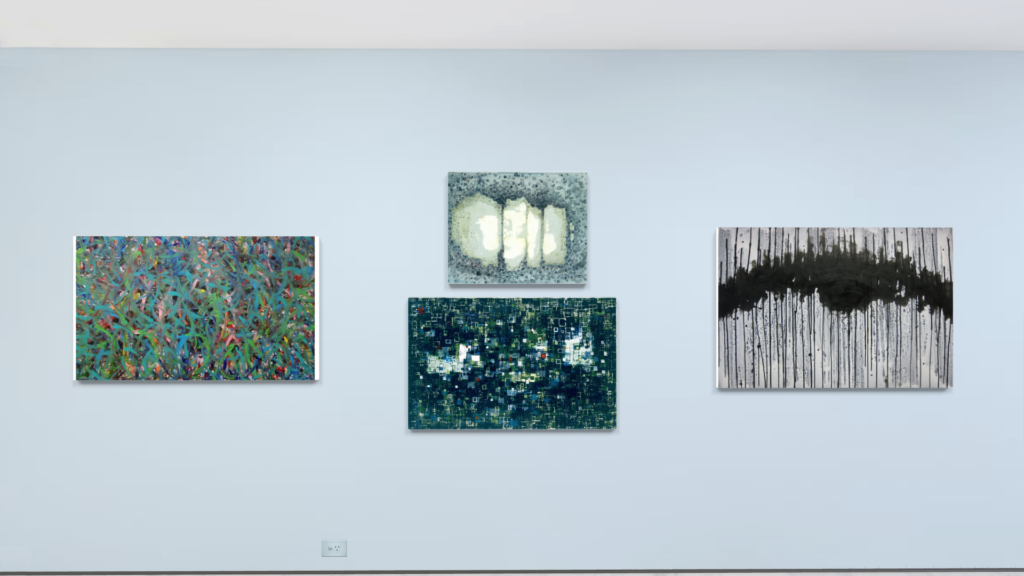
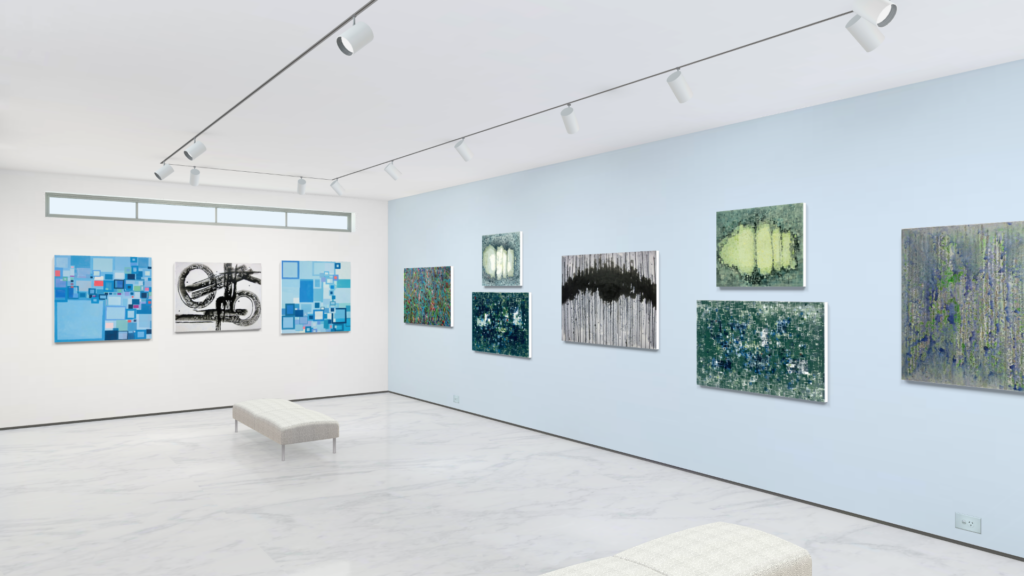
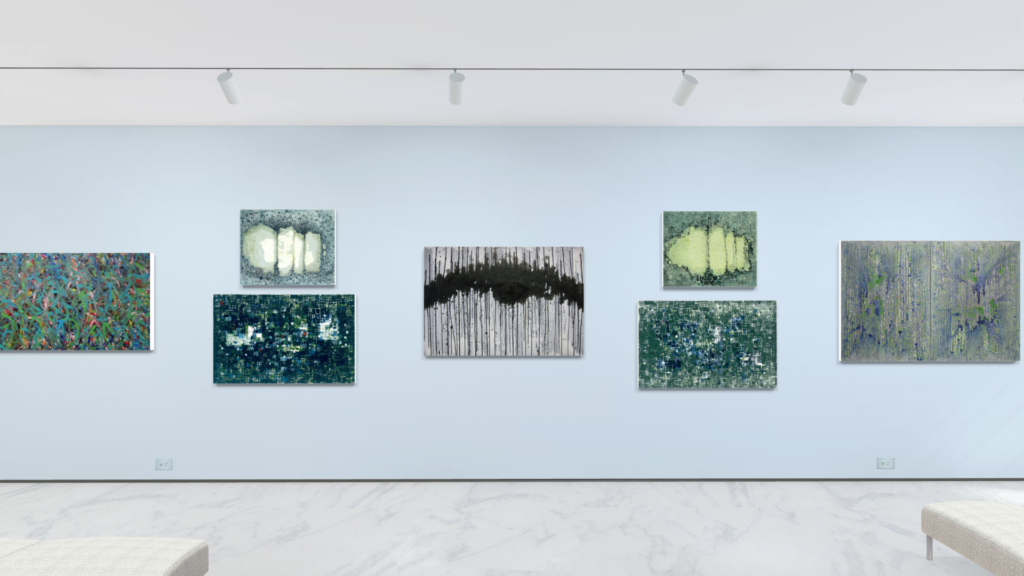
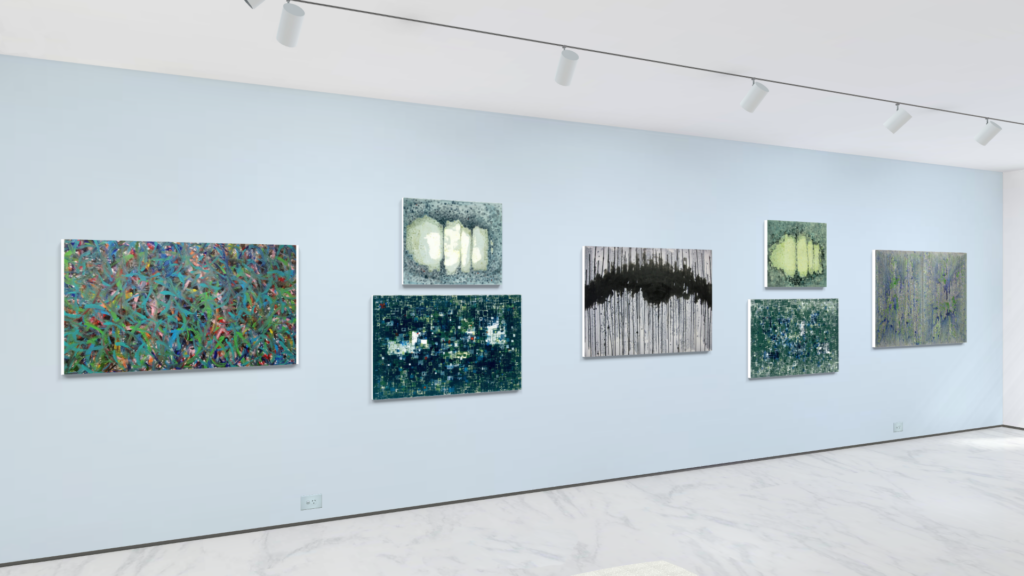
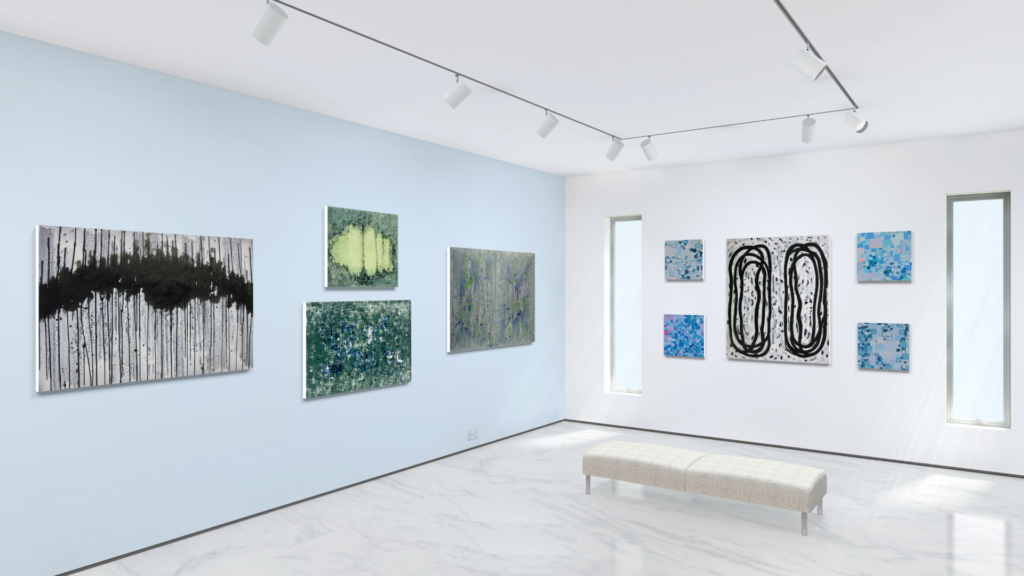
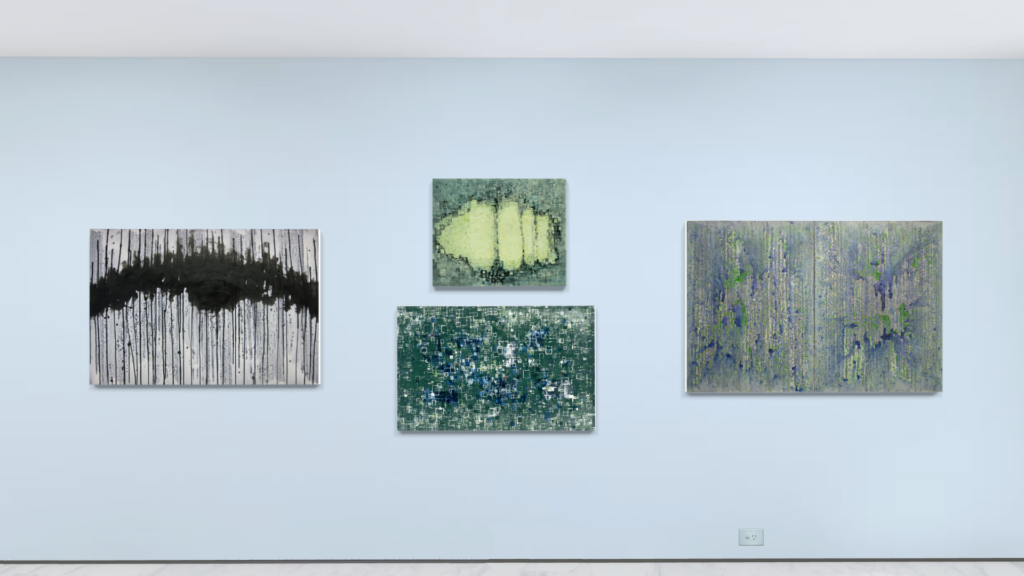
CBCA is proud to present ‘Akin,’ a two-person exhibition featuring Ann Conrad and Kiyoshi Otsuka. Both artists begin their respective practices with a consideration of the natural world. Where Otsuka’s paintings celebrate the beauty and power of natural elements, Conrad explores an increasing tension between nature and technology as well as technology’s impact on our perception of the world around us. While each employs different mediums and methodologies to investigate diverging ideas, both artists share rhyming abstracted geometric aesthetics. When viewed side by side, Conrad and Otsuka’s work act as elegant foils to one another in which the themes expressed by one artist compliment and deepen the nuances conveyed by the other.
CBCA is proud to present ‘Akin,’ a two-person exhibition featuring Ann Conrad and Kiyoshi Otsuka. Both artists begin their respective practices with a consideration of the natural world. Where Otsuka’s paintings celebrate the beauty and power of natural elements, Conrad explores an increasing tension between nature and technology as well as technology’s impact on our perception of the world around us. While each employs different mediums and methodologies to investigate diverging ideas, both artists share rhyming abstracted geometric aesthetics. When viewed side by side, Conrad and Otsuka’s work act as elegant foils to one another in which the themes expressed by one artist compliment and deepen the nuances conveyed by the other.
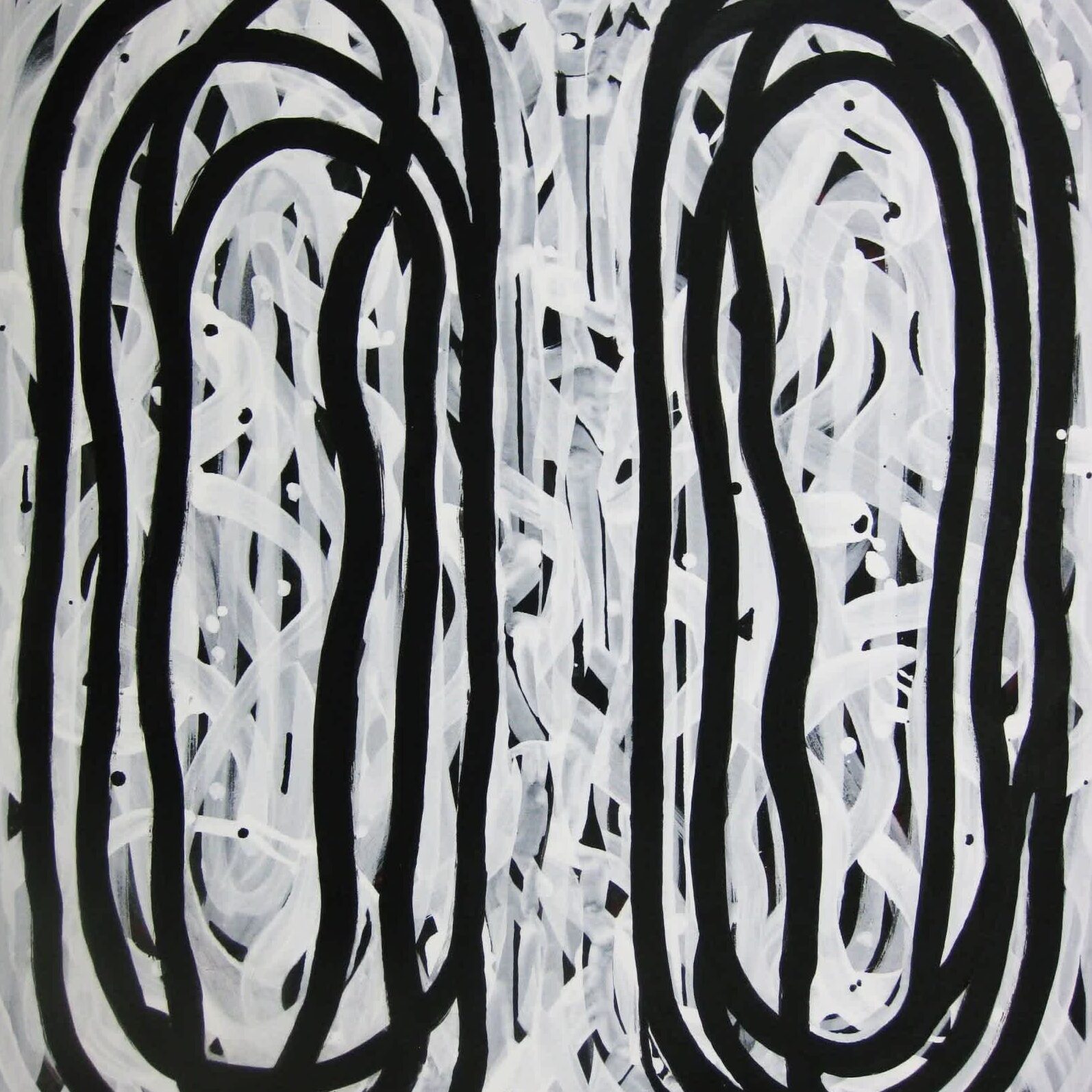
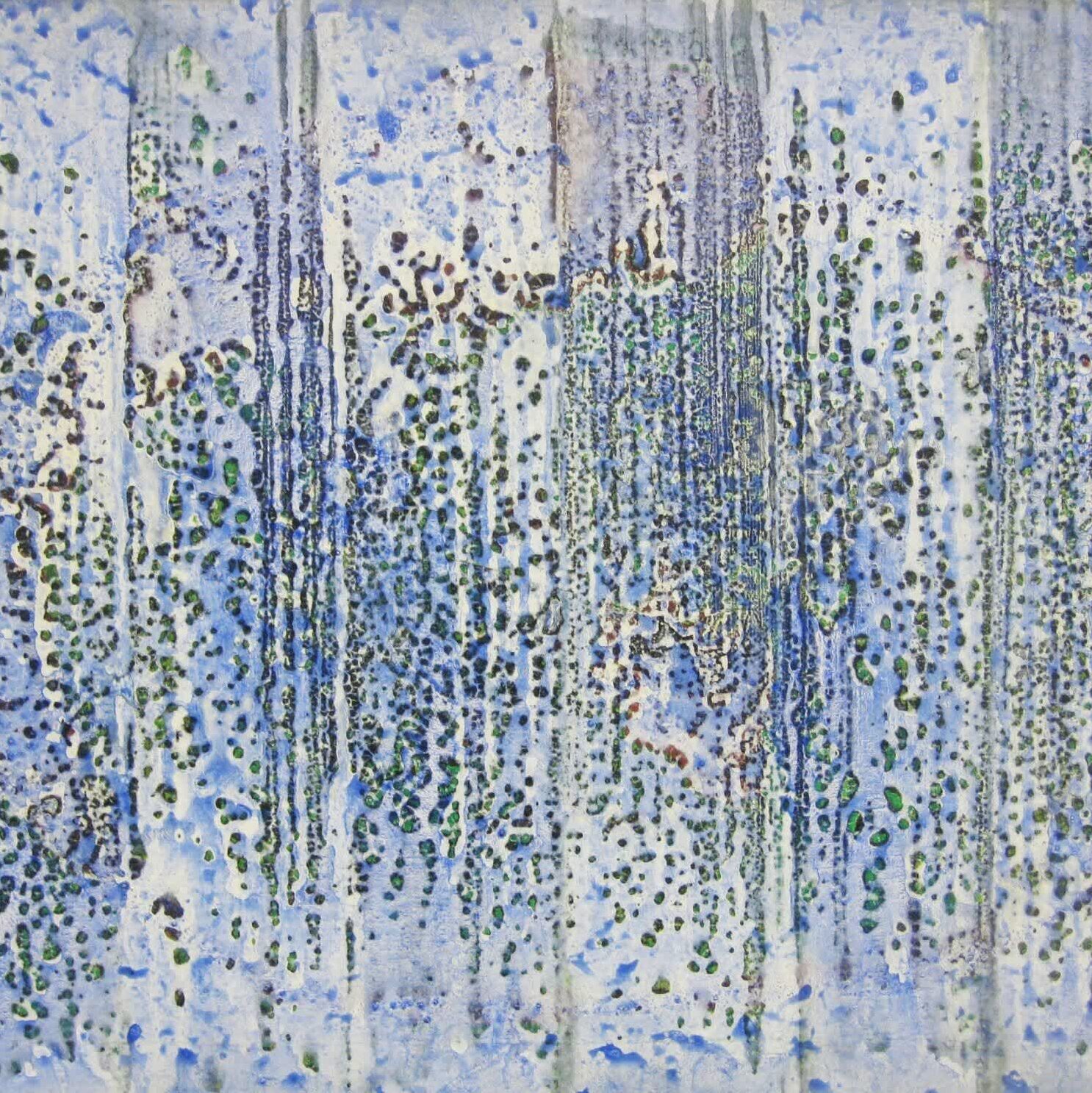
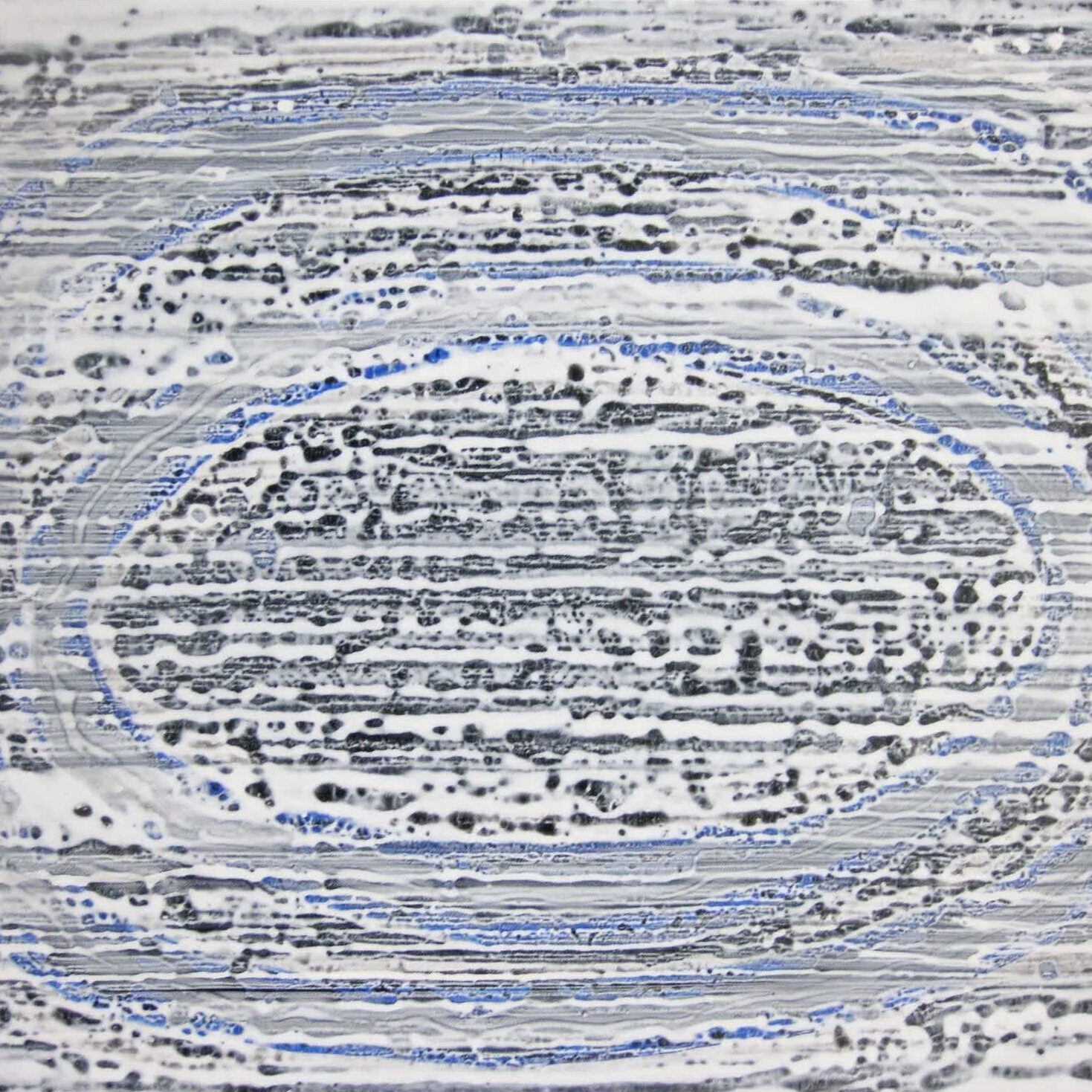
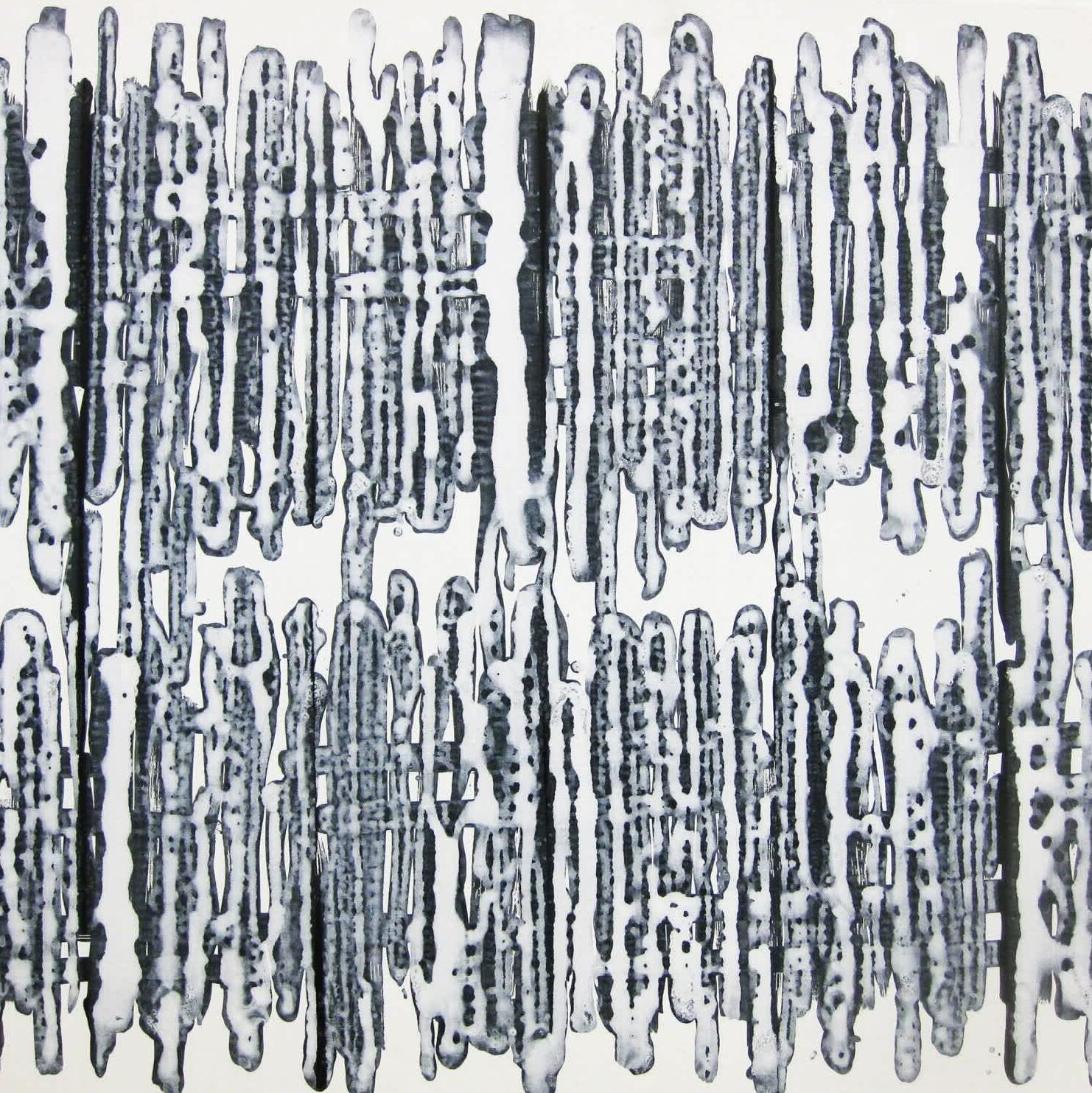
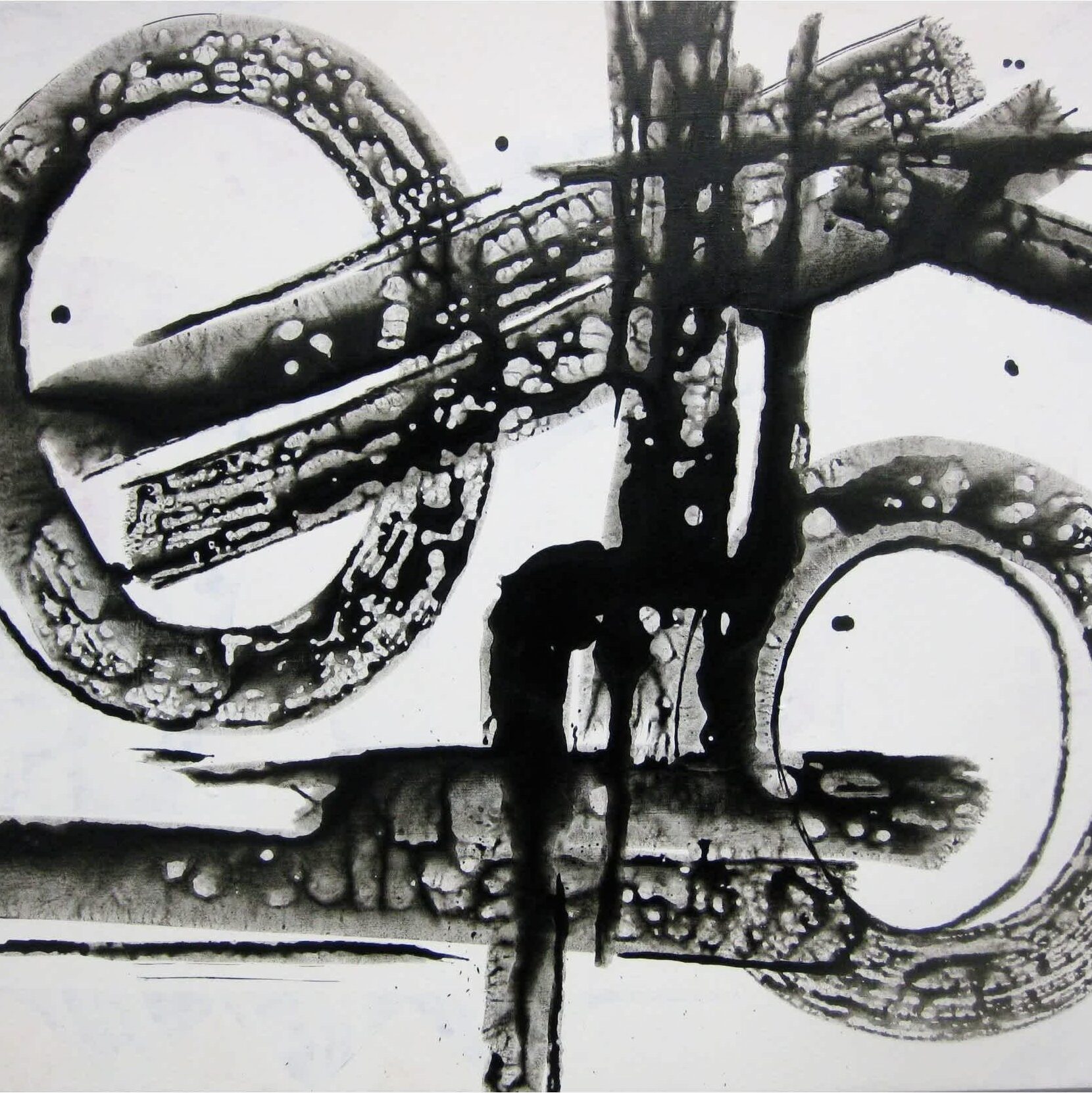
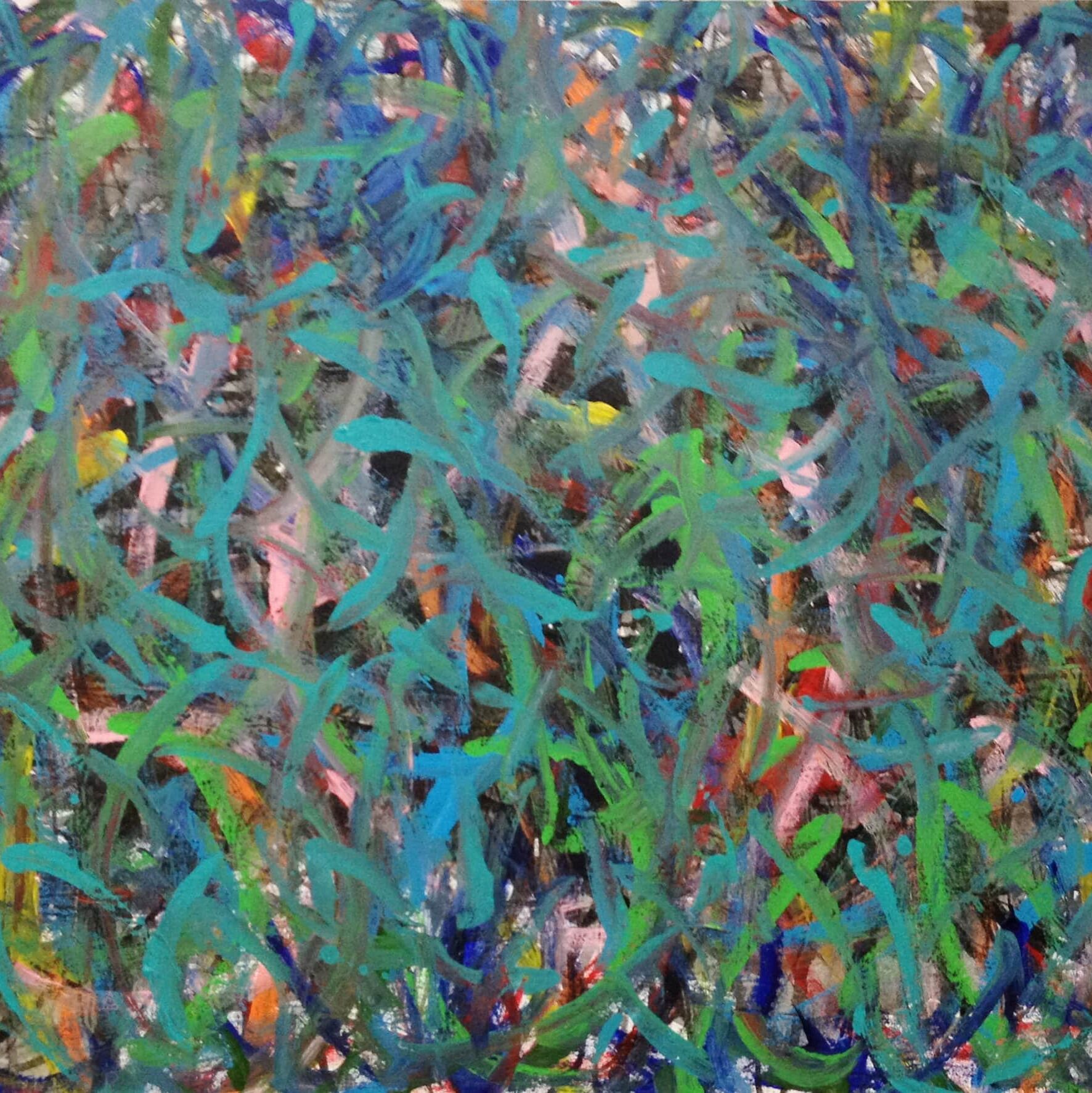
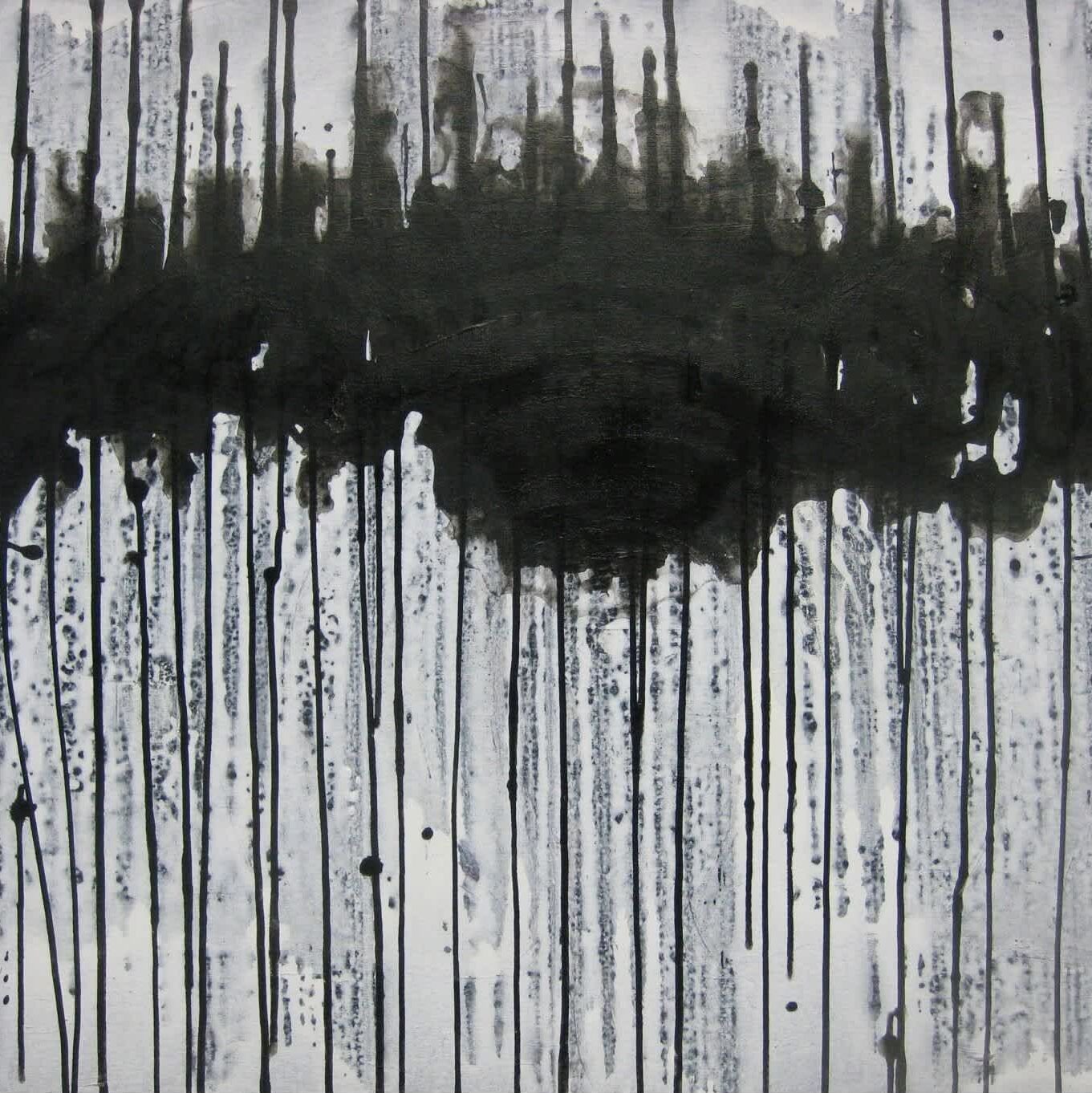
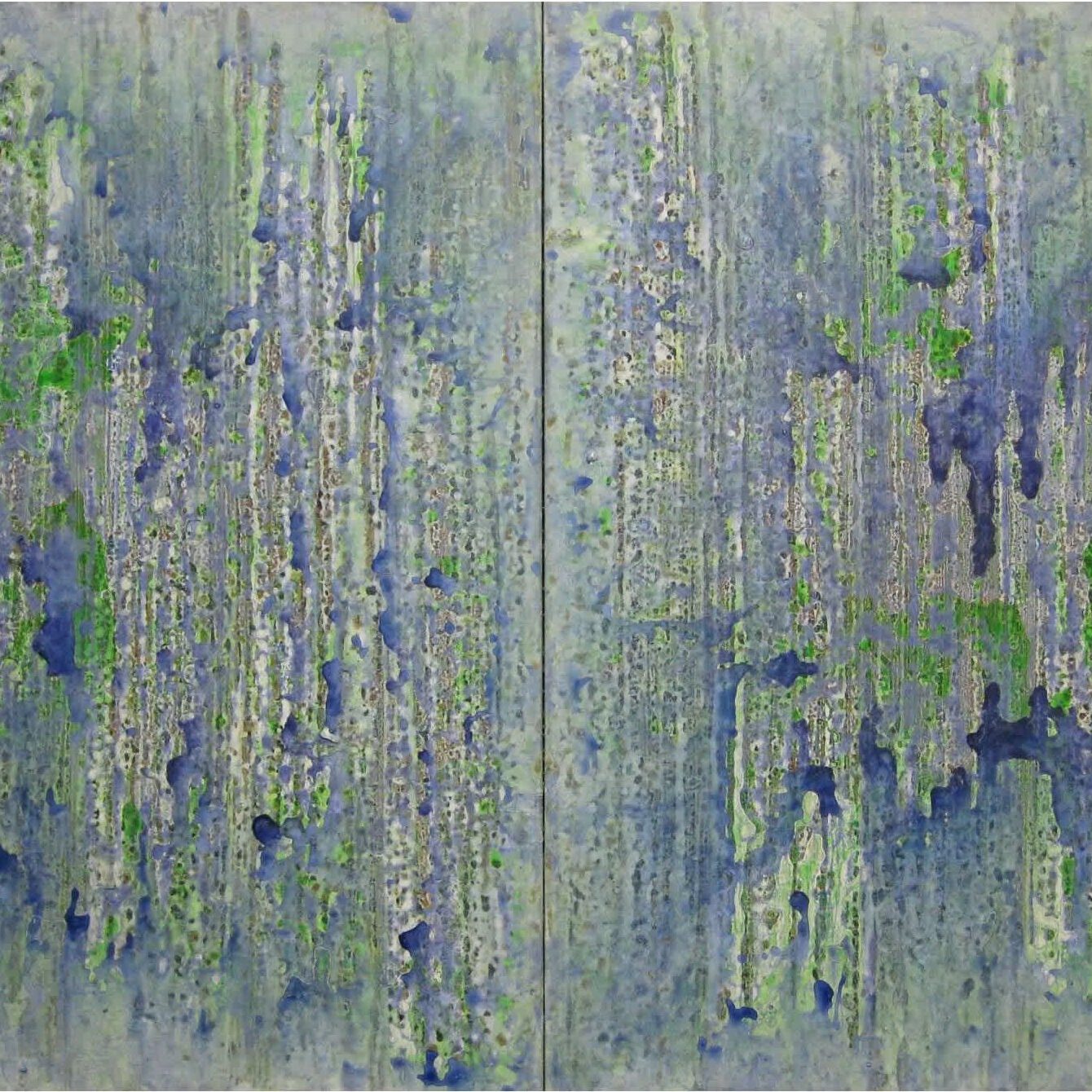
Kiyoshi Otsuka creates bold, abstract paintings which seek to portray the beauty and power of nature and our connection to the natural world. Inspired by traditional Japanese painting and the New York Botanical Gardens, Otsuka’s organic aesthetic is significantly influenced by natural elements, particularly water. Working predominantly in acrylic, his style is informed by the liquidity of the medium. Through controlled movements, Otsuka produces multilayered, curvilinear compositions often comprised of carefully applied drip patterns or practiced, gestural brushstrokes.
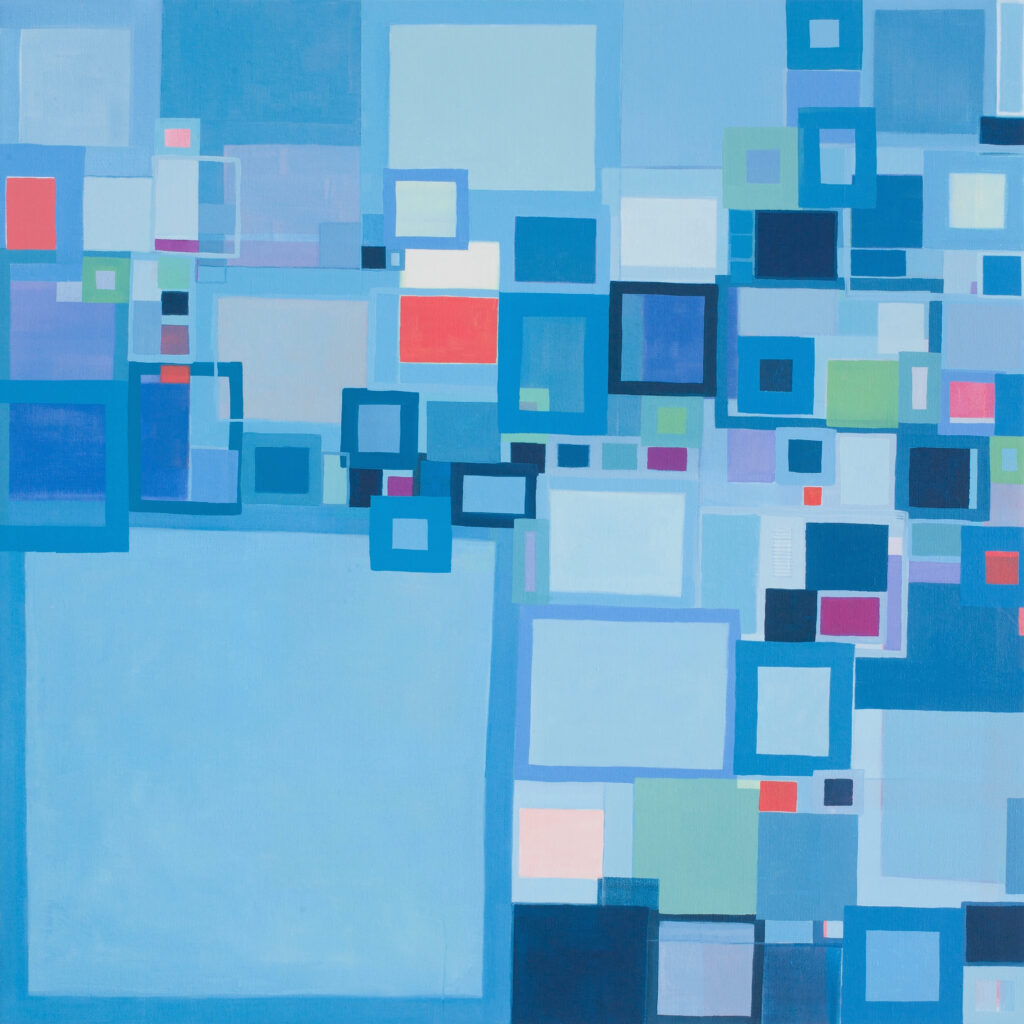
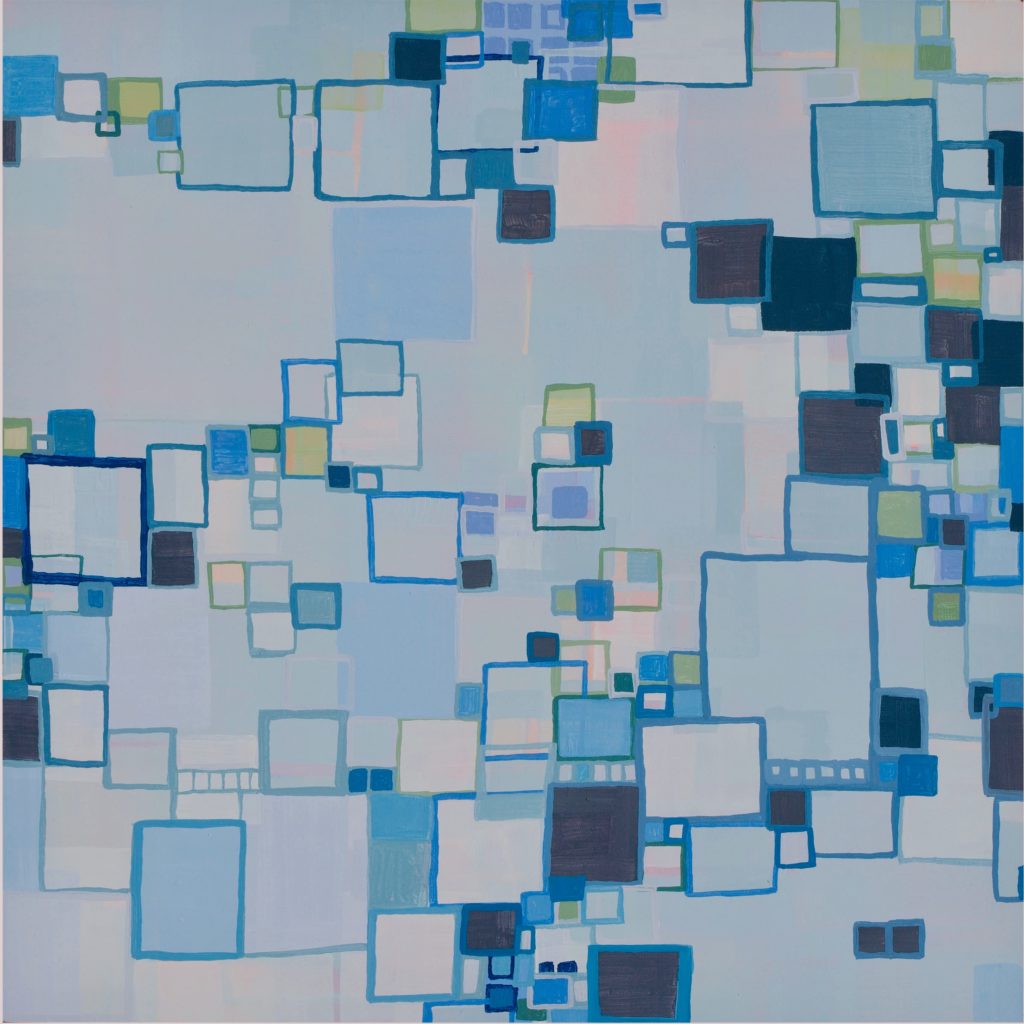
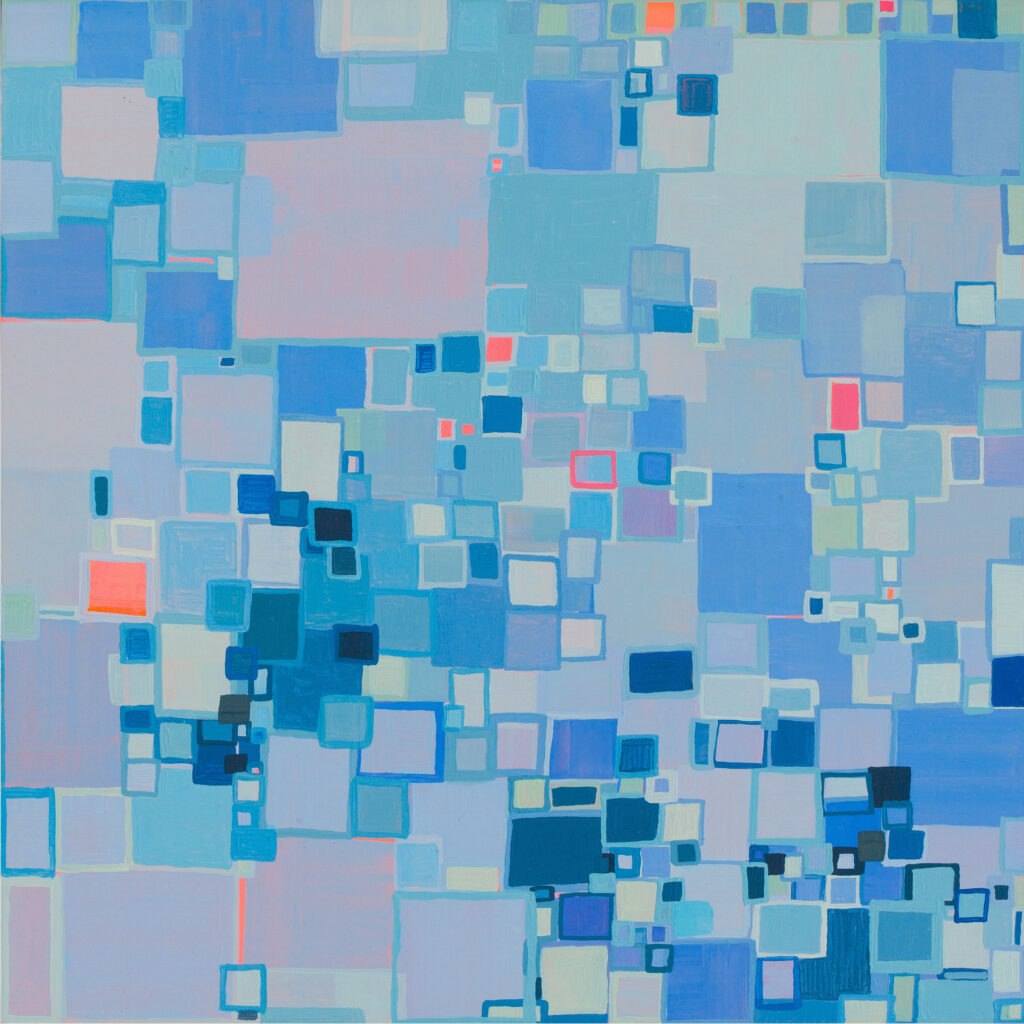
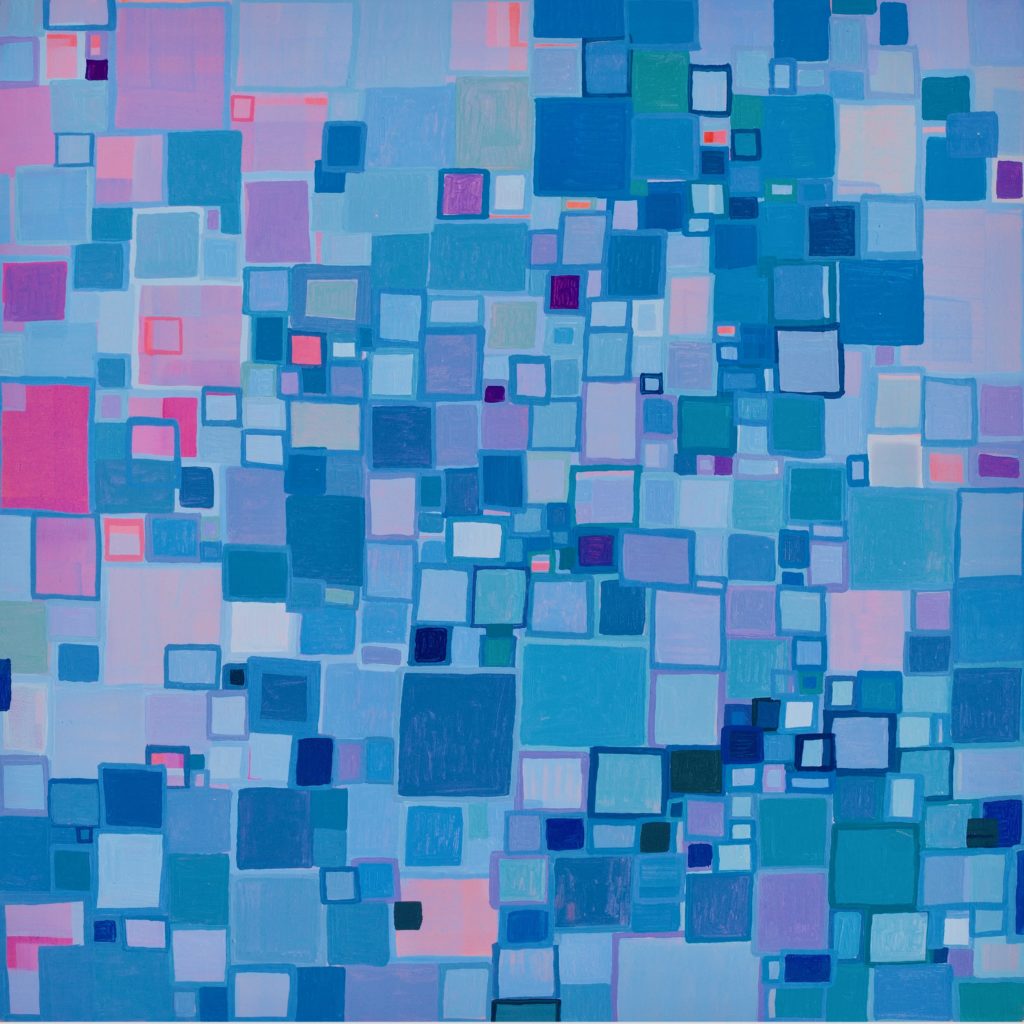
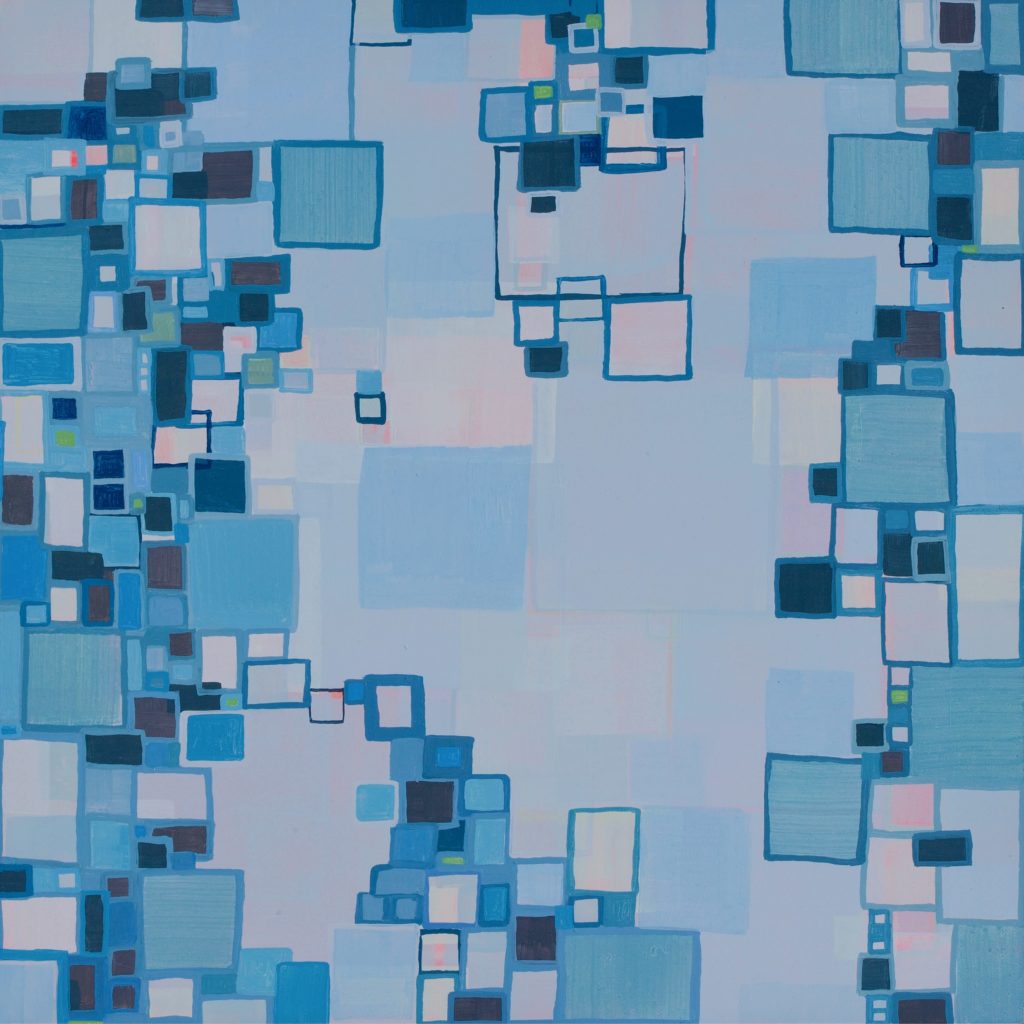
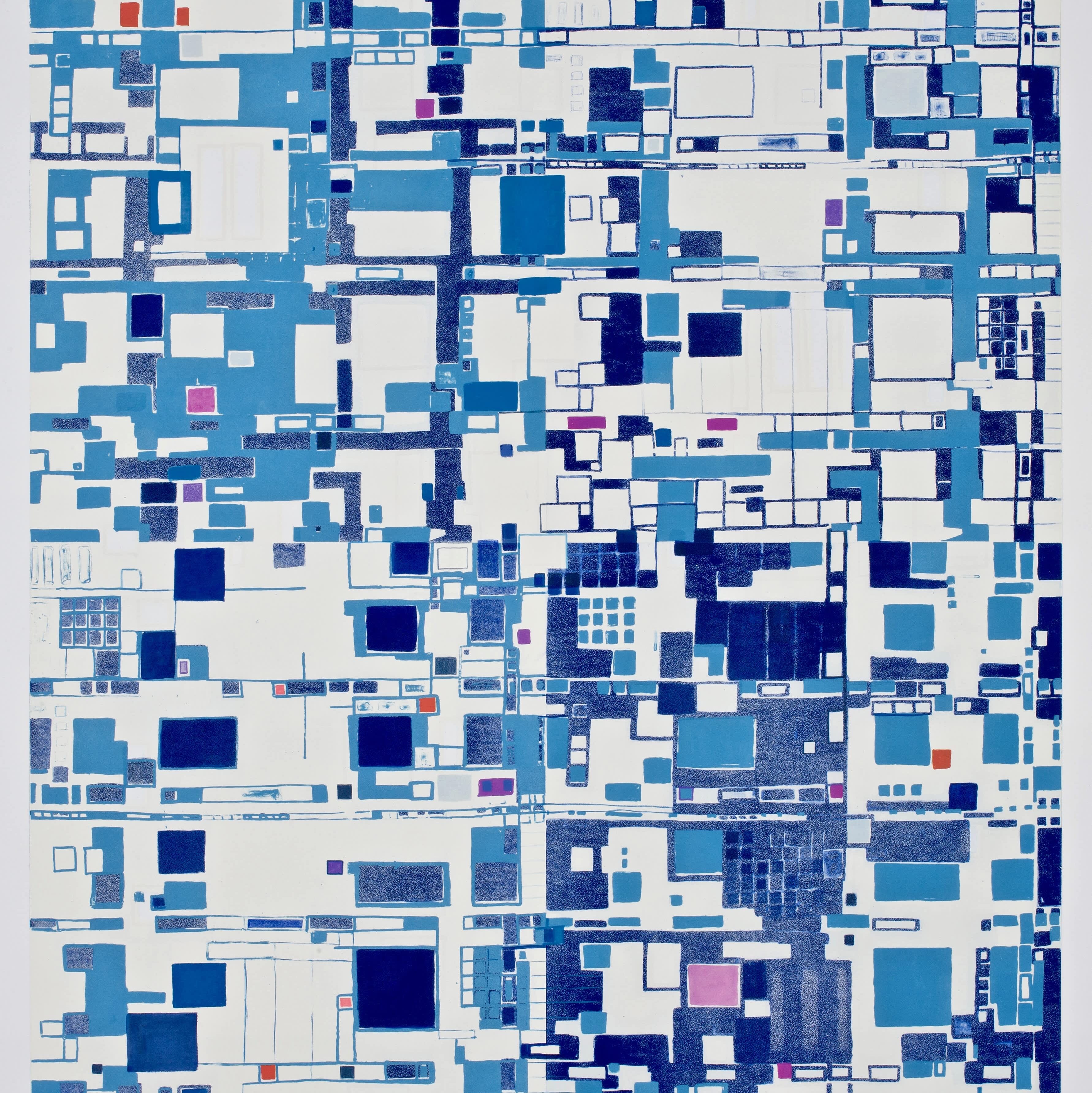
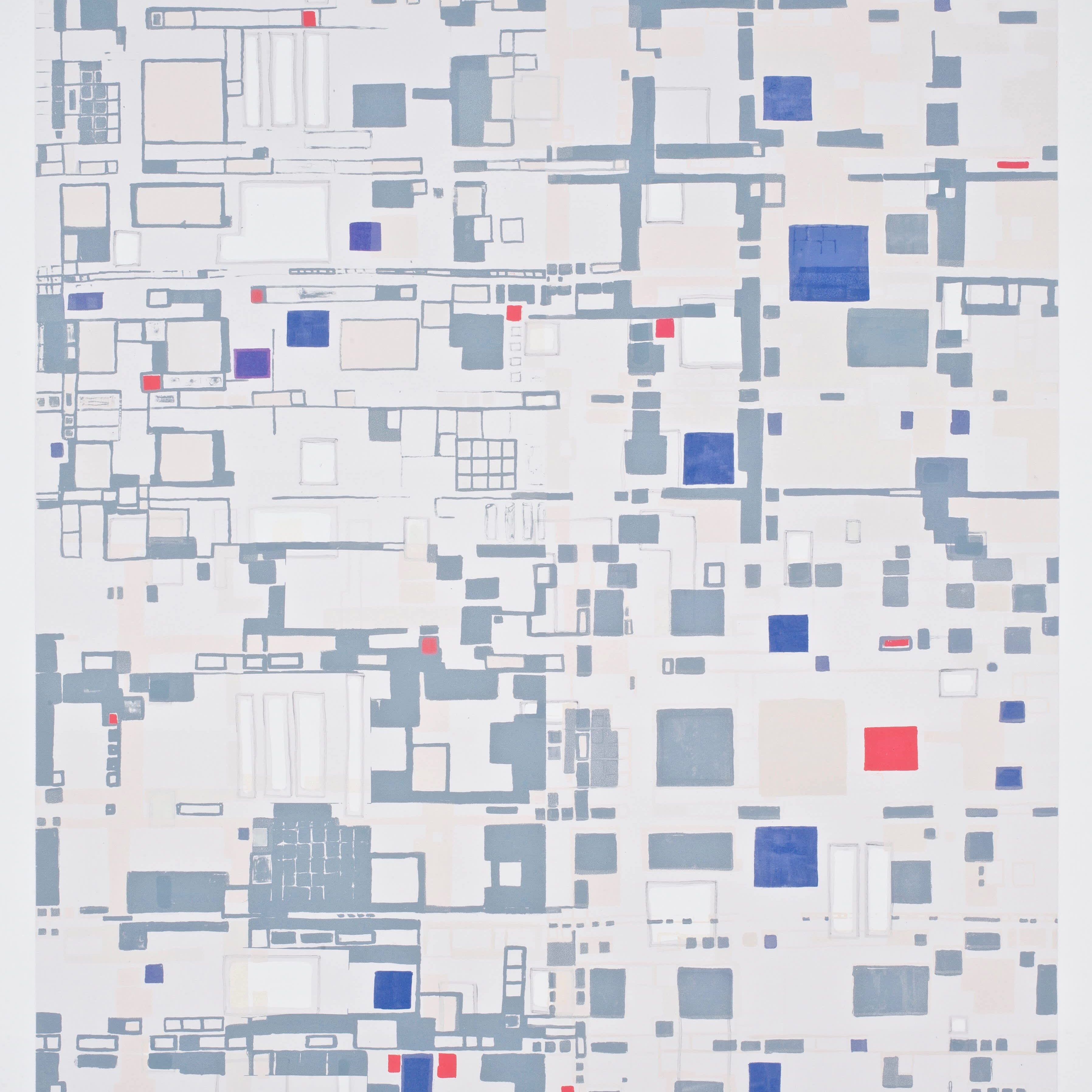
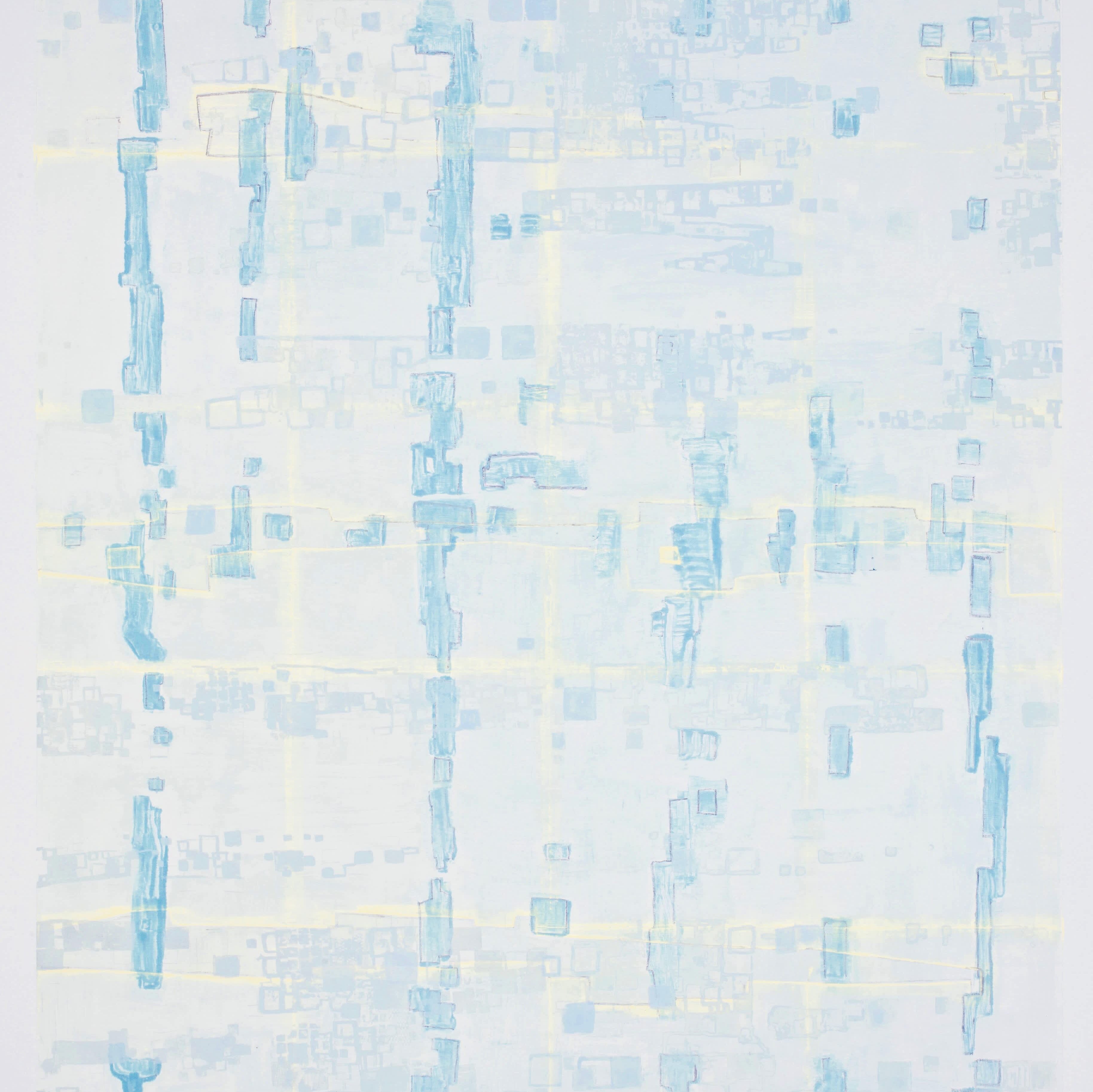
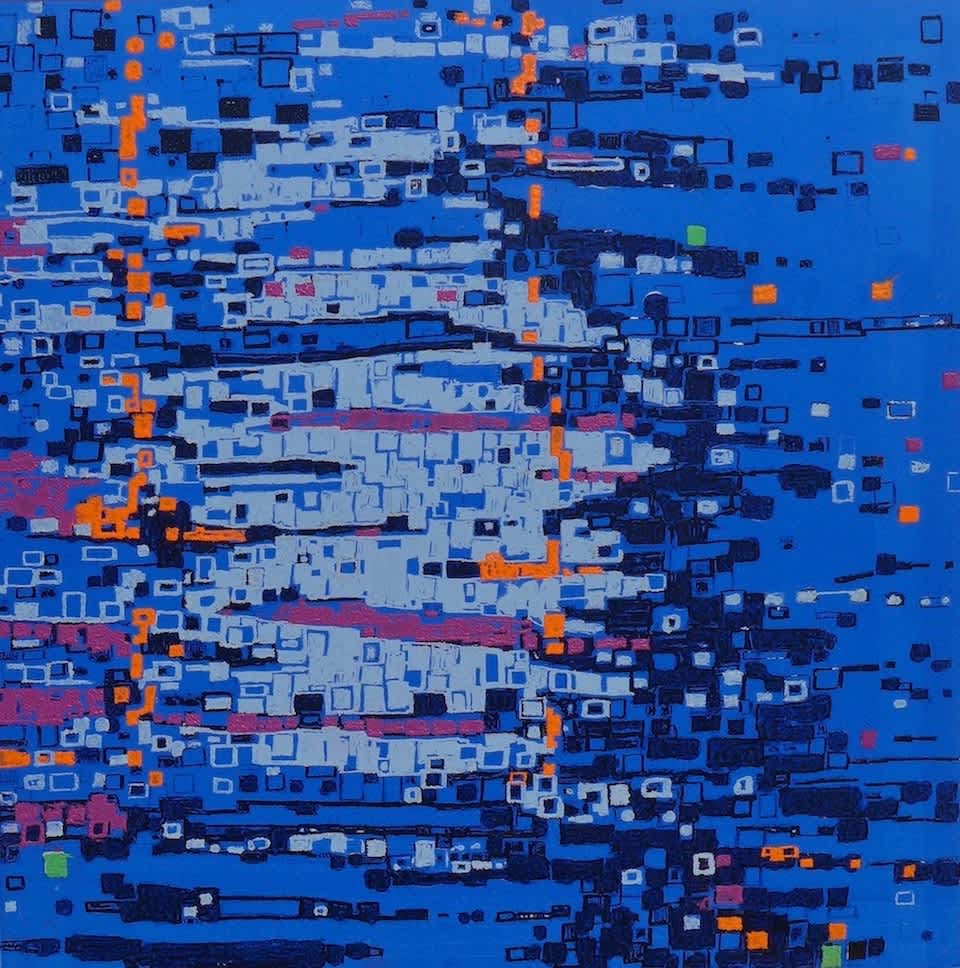
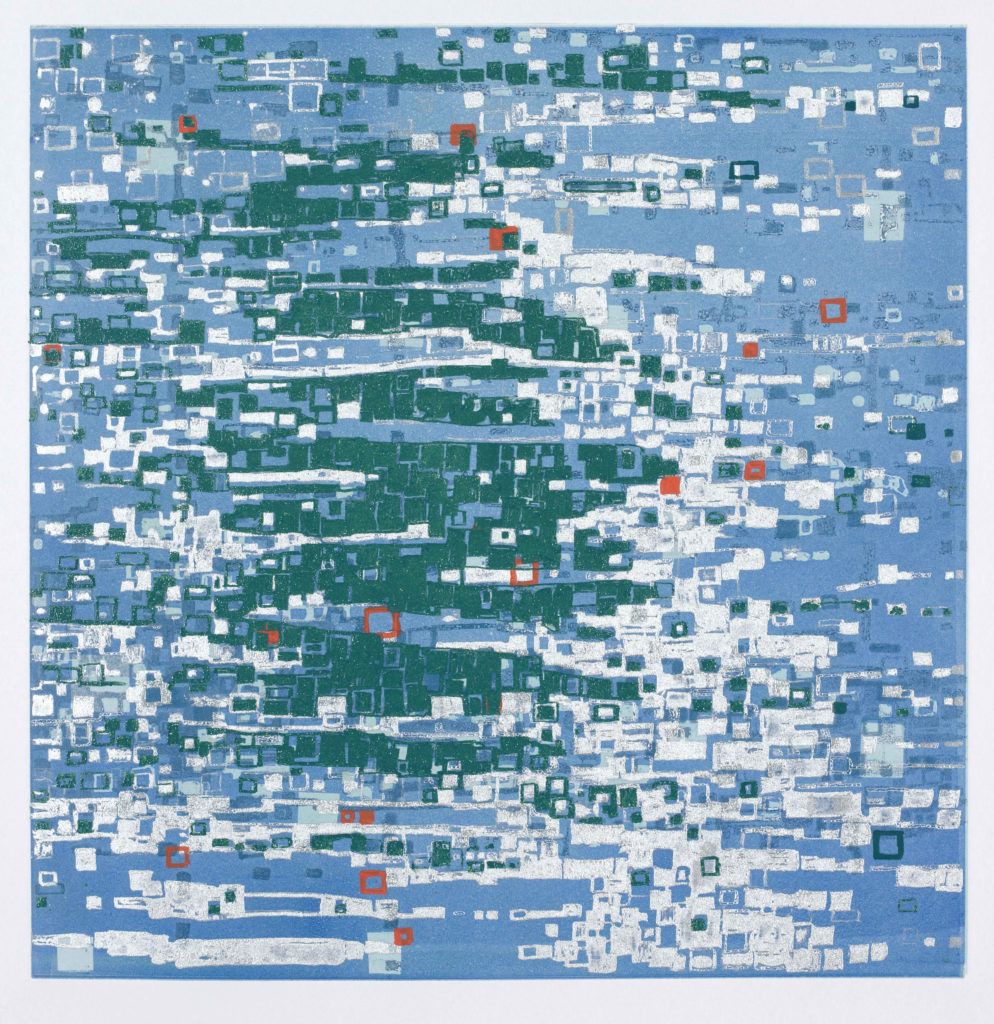
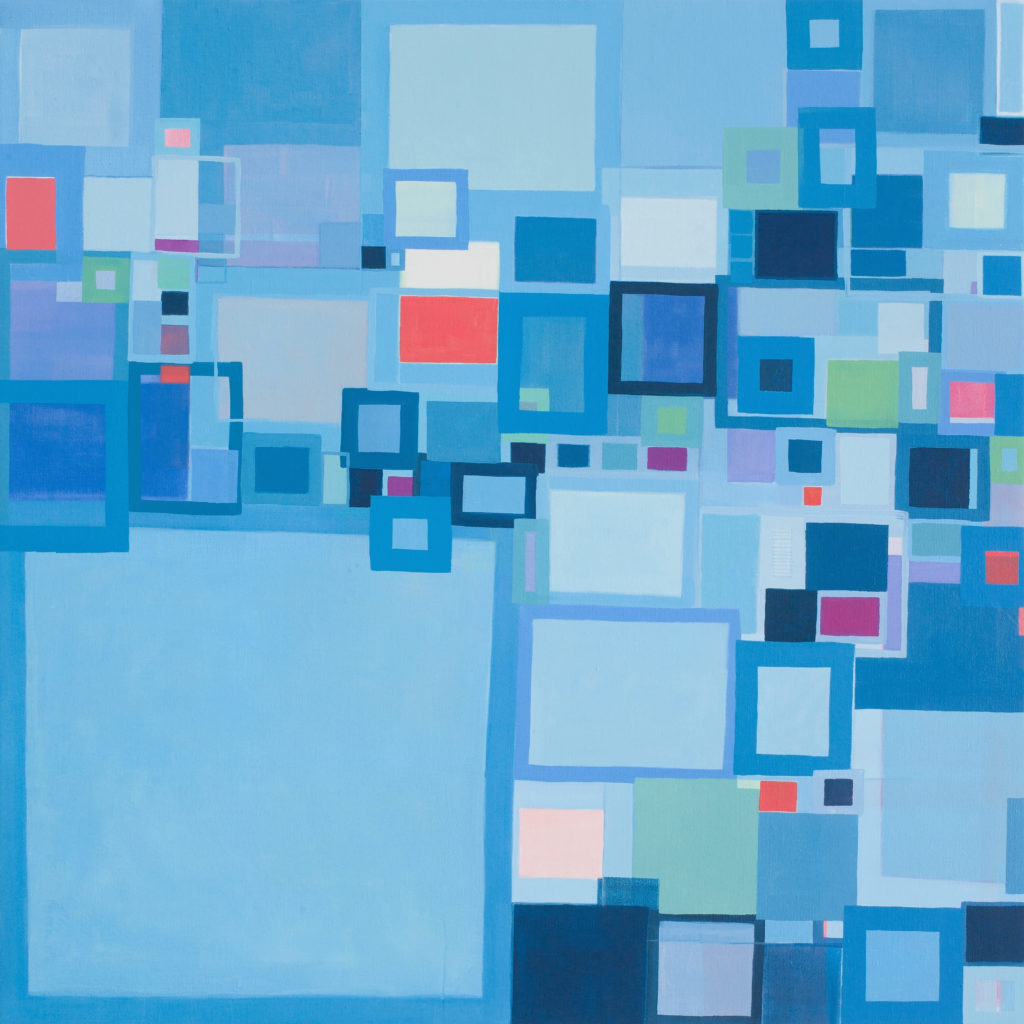
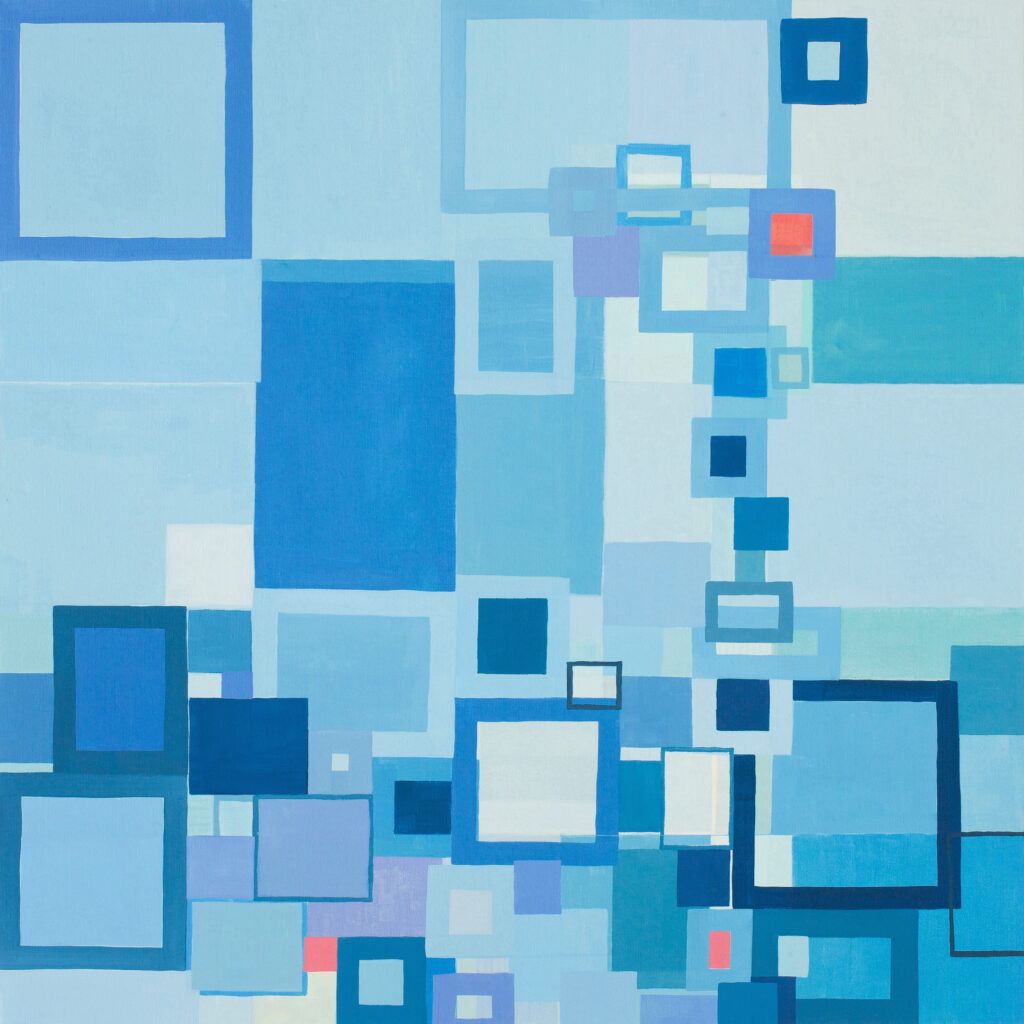
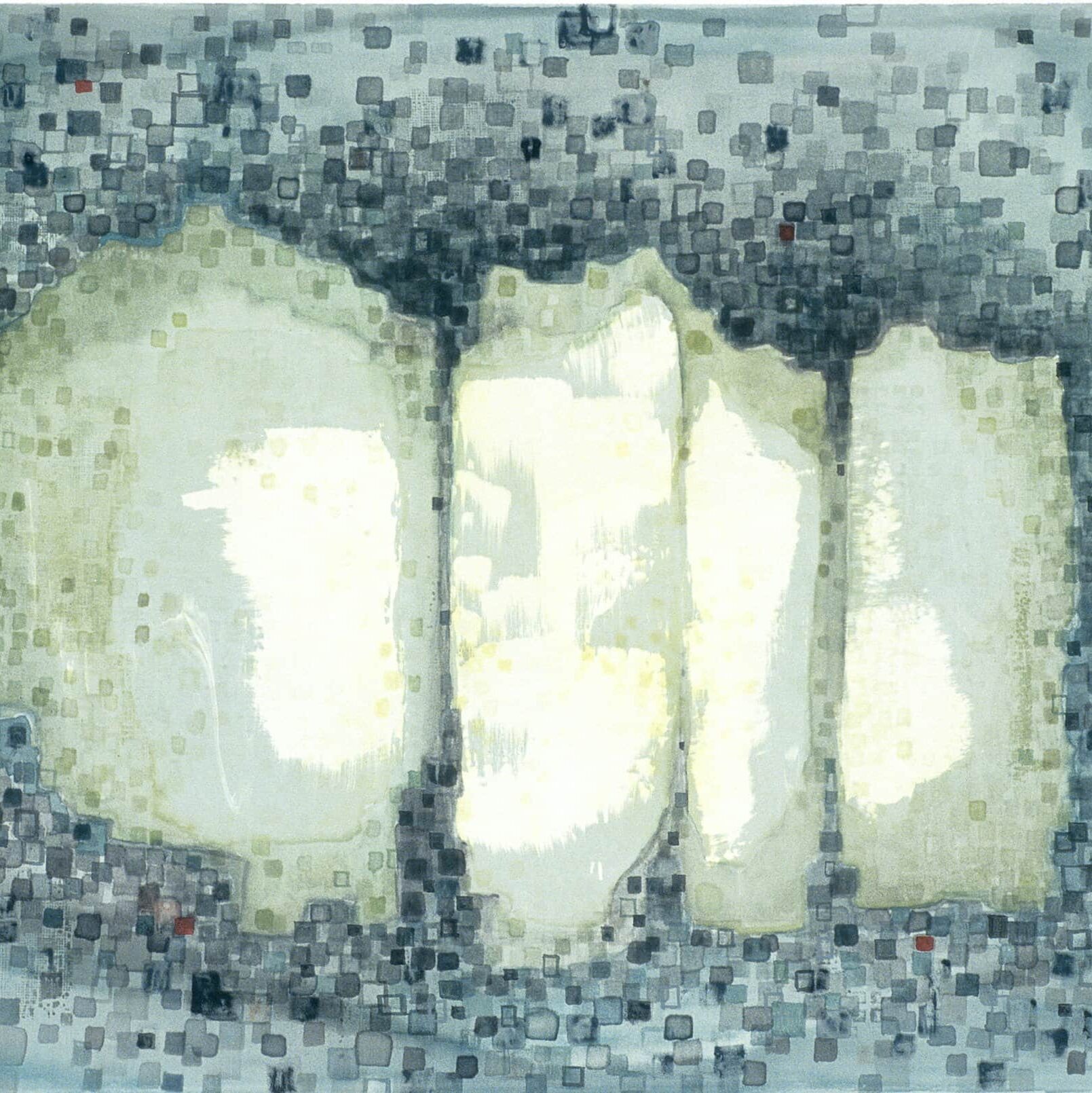
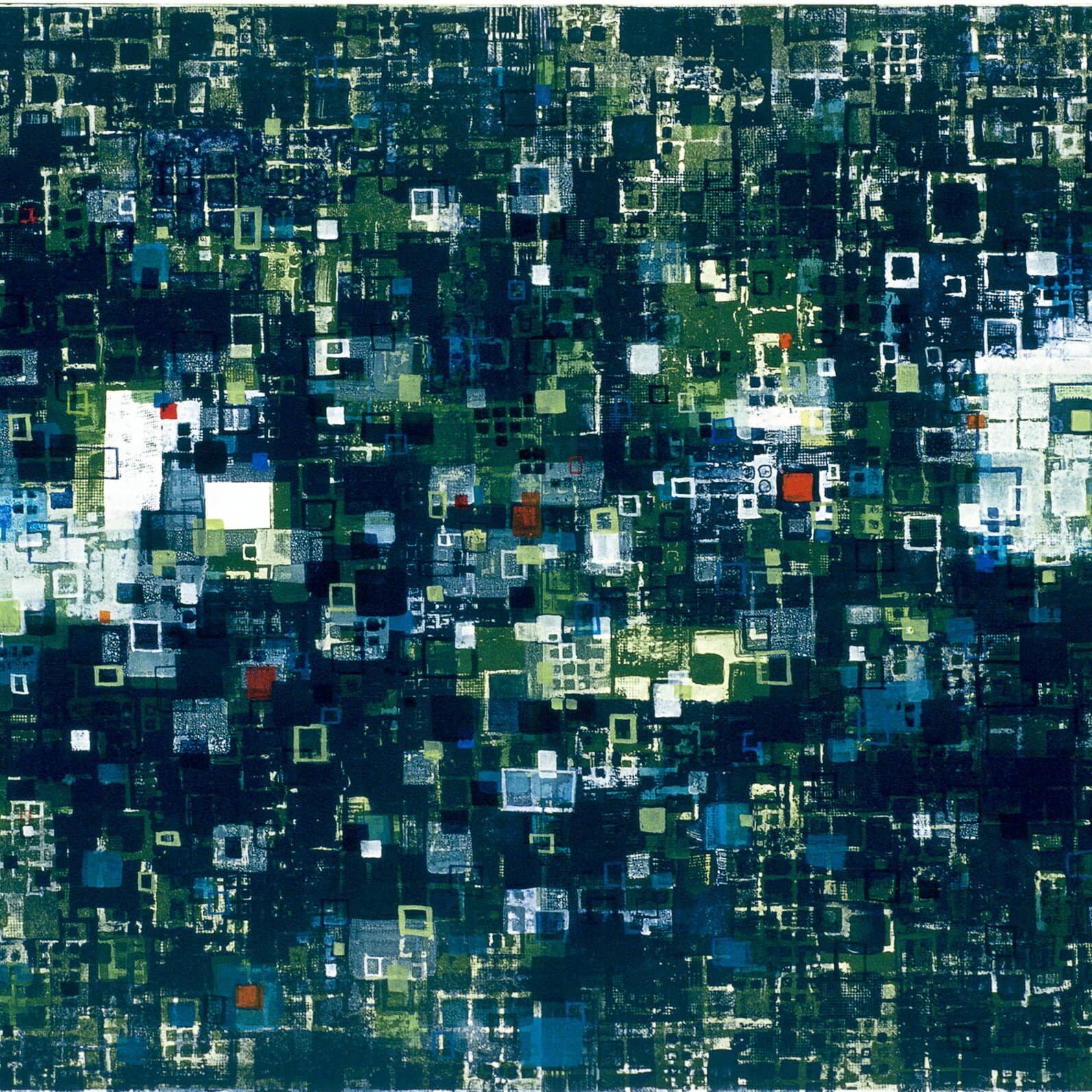
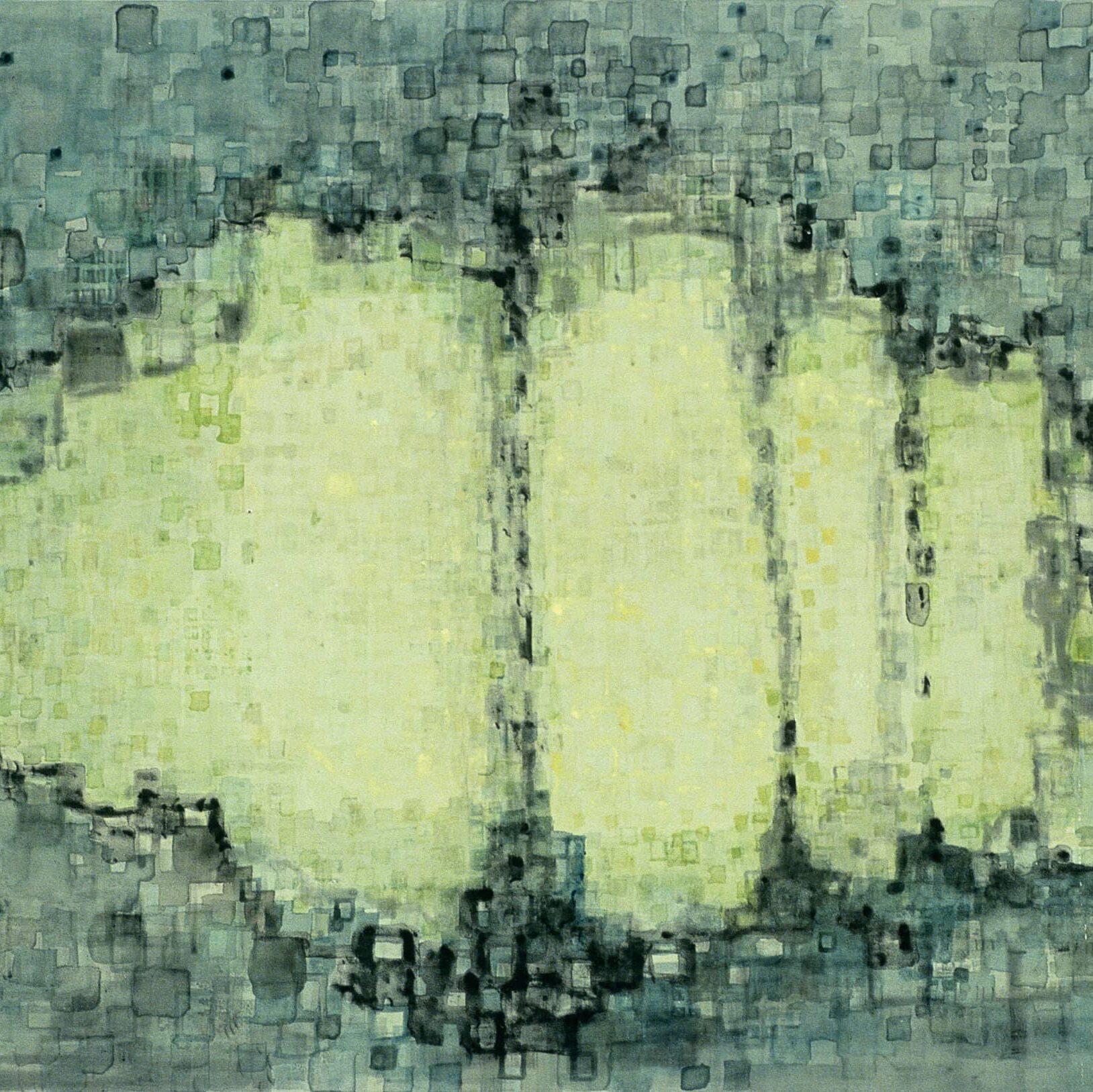
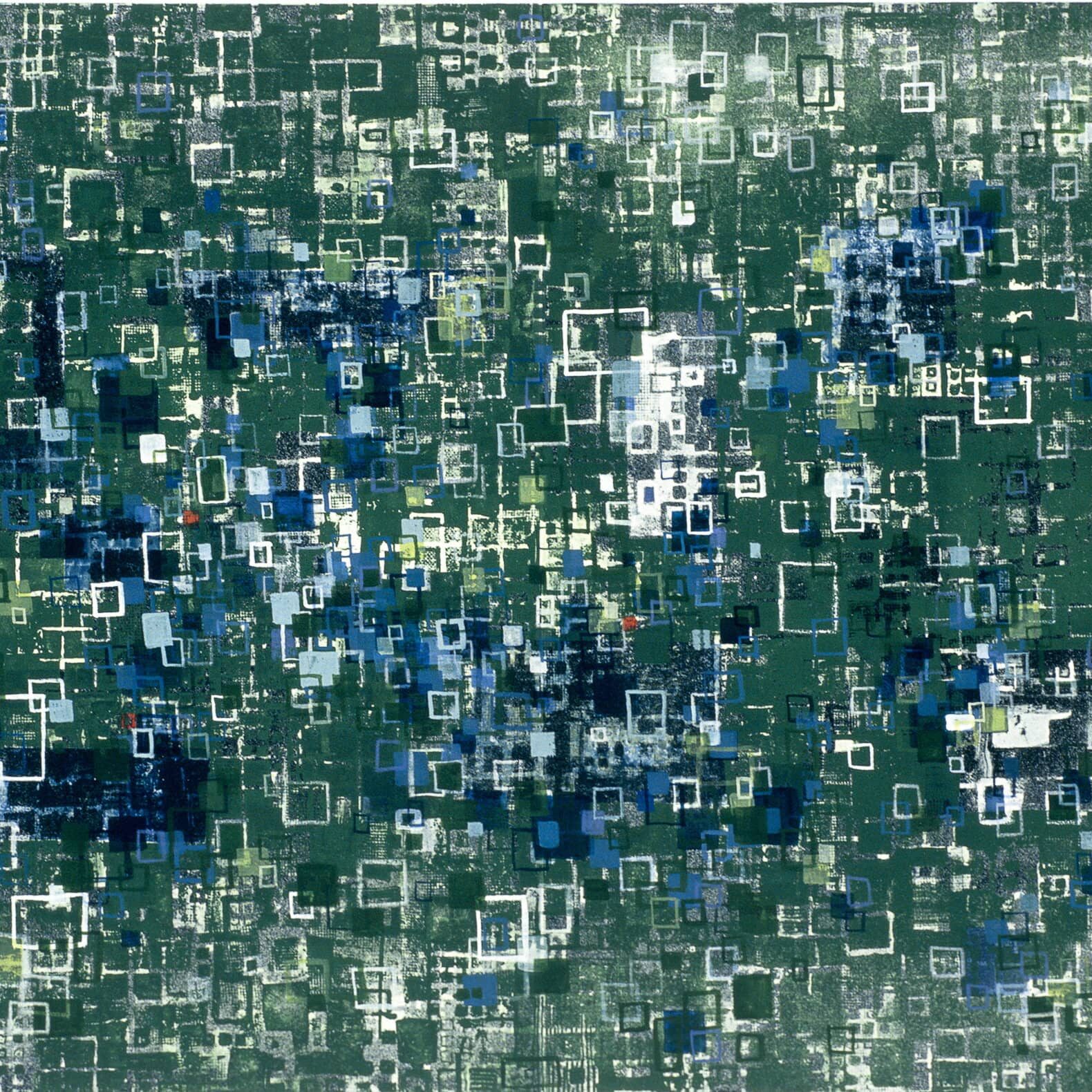
Conversely, Ann Conrad blurs the lines between painting, printmaking and photography. In a process she refers to as “digital seeing,” Conrad begins with digital images such as landscapes, waterscapes, or even digital static that she zooms into on her computer to find vibrant, pixelated patterns which she then interprets as hand painted compositions. Each work wrestles with the contrast between the imprecision inherent in handmade mark making and the predictably rigid pixel grid of digital images. The recursive, layered surfaces she constructs from her unique interdisciplinary approach produces a depth and organic texture to each piece which draws in the viewer. Ultimately, Conrad hopes to call attention to technology’s ability to alter and enhance our visual reality and encourage viewers to consider what it means for something to still be made by hand.
Together, Conrad and Otsuka’s artwork open a rich dialogue around our connection to and increasing distance from the natural world. Aesthetically, each artists’ cool, natural color pallets and abstracted geometric compositions seem akin to one another. The bubbling and pooling of Otsuka’s thinned acrylic medium dripping across the canvas in pieces such as ‘Techtonic Series 4065,’ creates a similar impression to the delicate geometry of work such as Conrad’s ‘Kerr Effect XV’ in which she combines monotyping, collagraphing and hand coloring to depict pixelated views of light refracting off the water’s surface. When positioned alongside the instinctive movement of Otsuka’s gestural brushwork and liquid medium, the handmade quality of Conrad’s compositions shines brighter. The tiny imperfections and natural harmony of her hand-rendered pixels are drawn out and the implied precision of the digital patterns around which she structures her compositions are disrupted and softened.
Thematically, Conrad and Otsuka’s work also complement one another. Otsuka’s reverence for the purity and power of nature reinforces the value of the handmade elements of Conrad’s practice. Through each layer of her interdisciplinary process, her images become increasingly altered from their original states, exploring the impact of technology on our perception of the world around us. However, her final works are either entirely handmade in the case of her paintings, or significantly altered with hand-applied marks and coloring, as in the case of her print work. In tandem with Otsuka, her work insists on the irreplaceable value of what it still means to make something by hand, thus implying an enduring connection with the natural world. In turn, the open-ended questions explored through her practice cast a bittersweet light on Otsuka’s paintings, suggesting what all stands to be lost or preserved amid the increasing distance between us and the natural world in the wake of intensifying technological intervention.