
In the Studio with Catherine Chesters
June 3, 2026
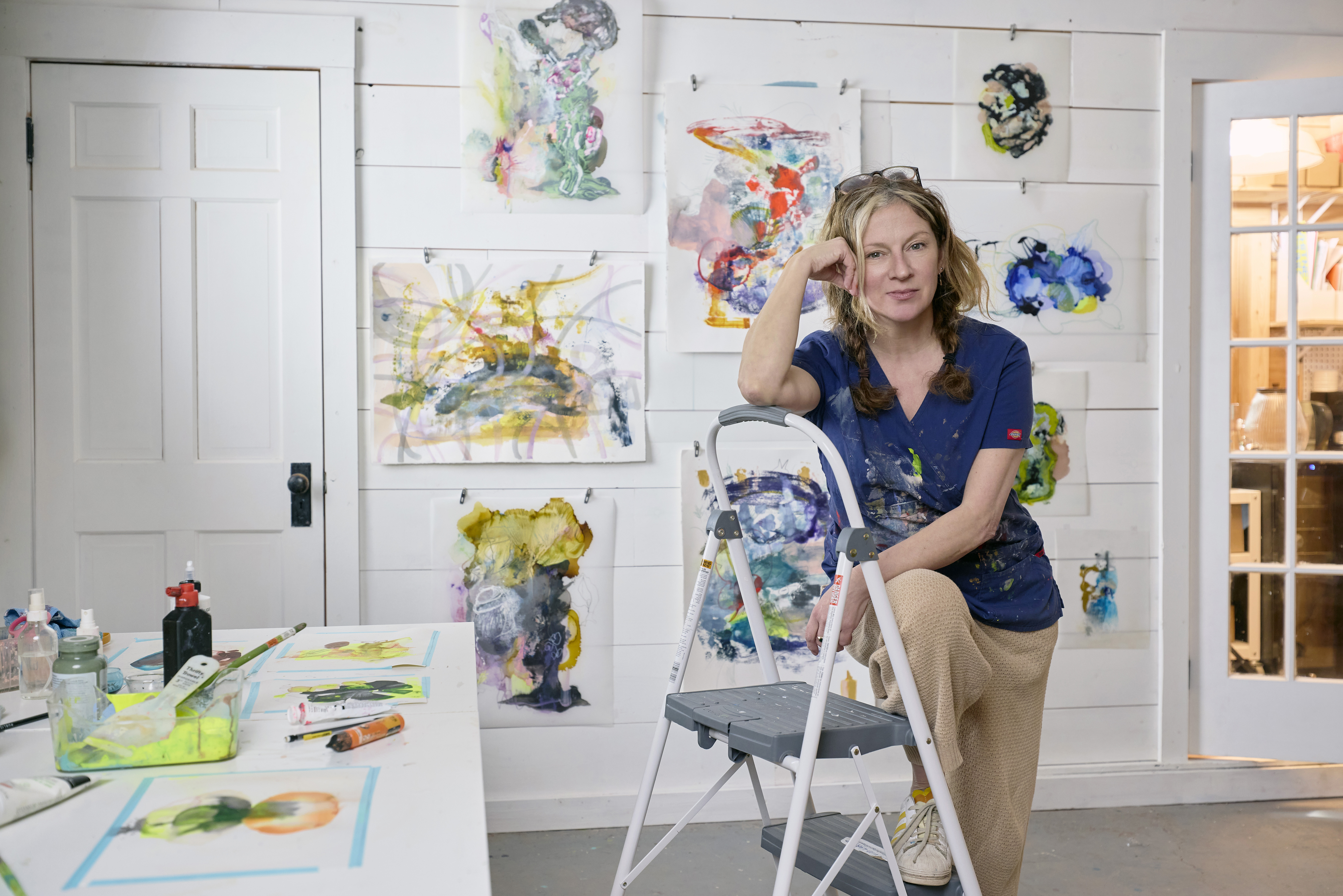
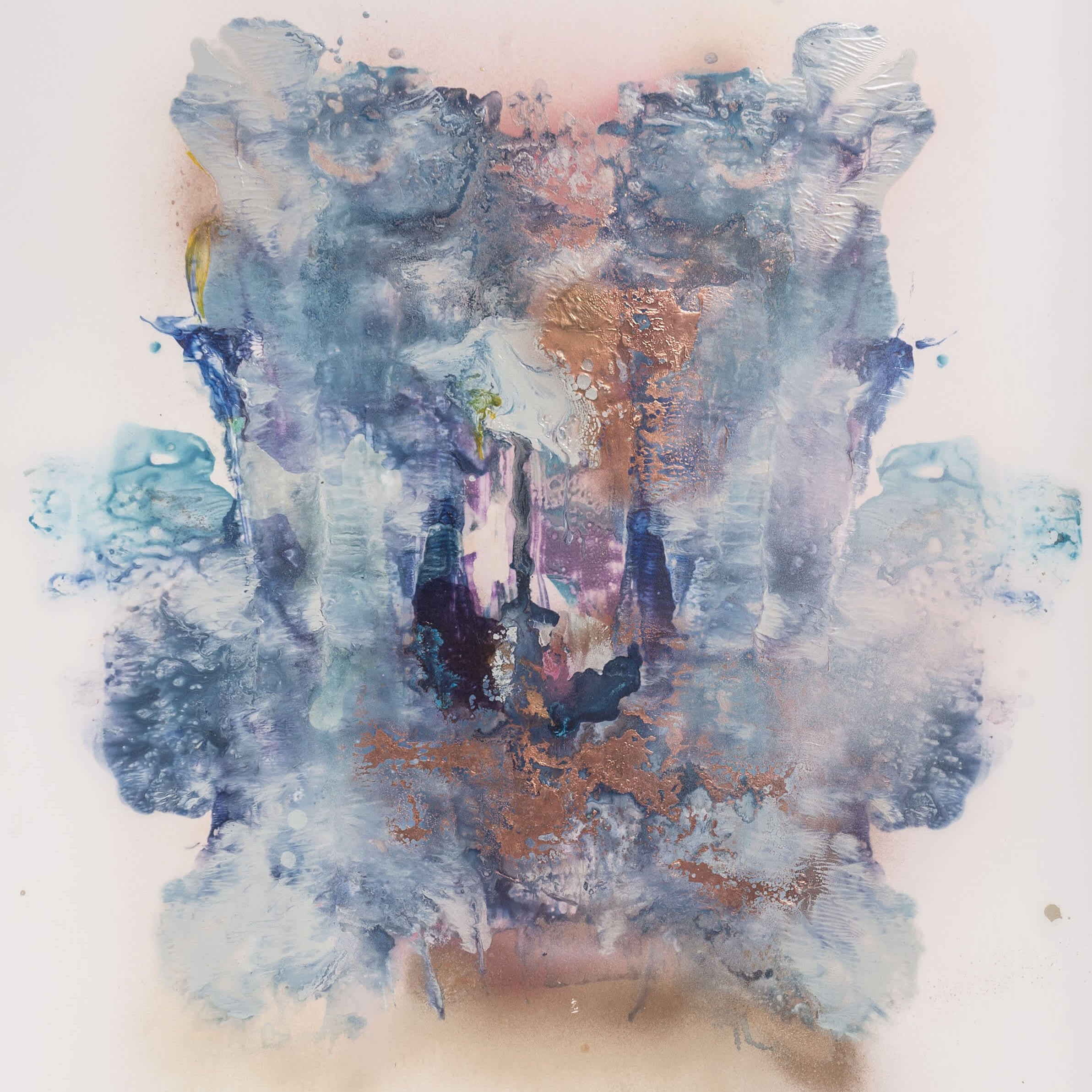
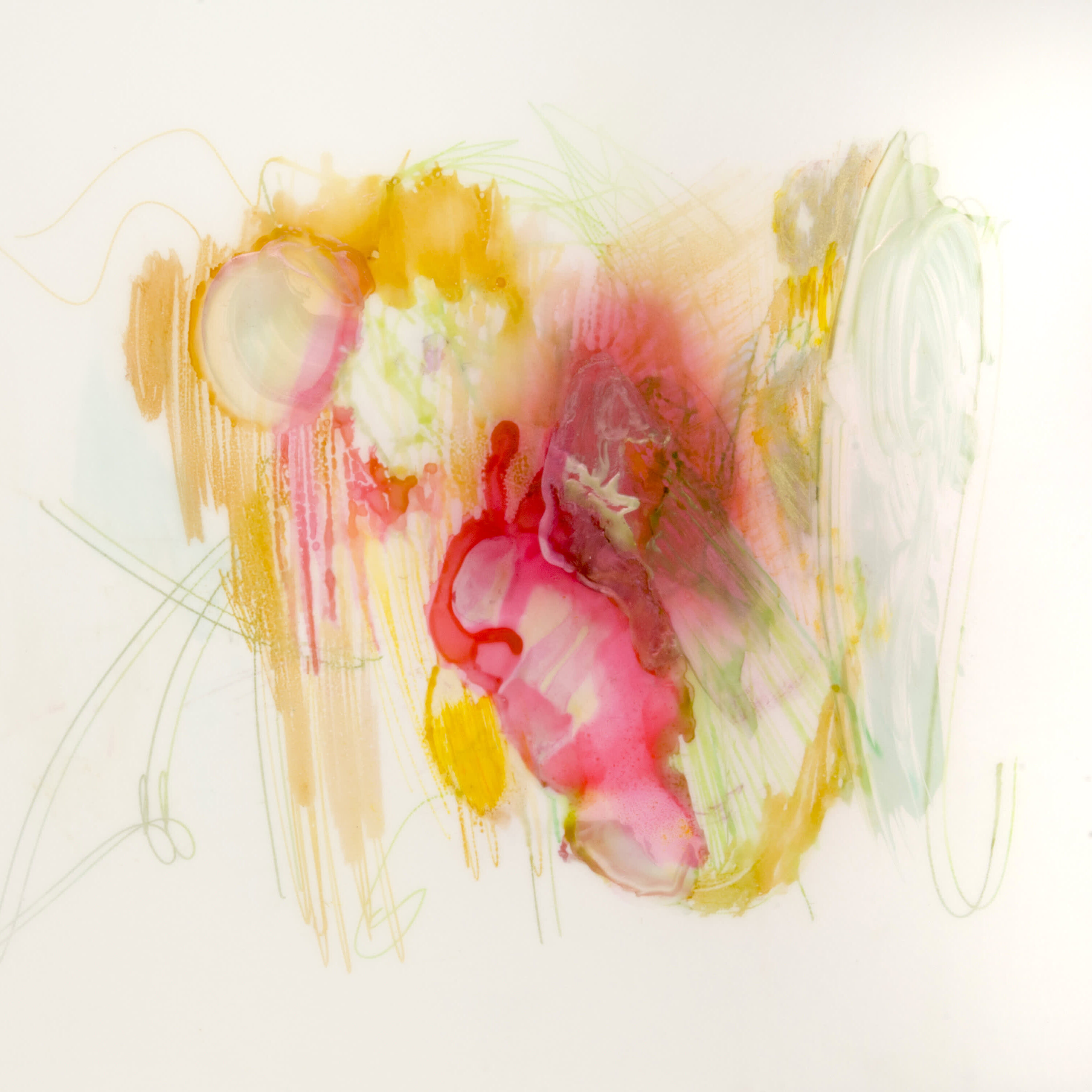
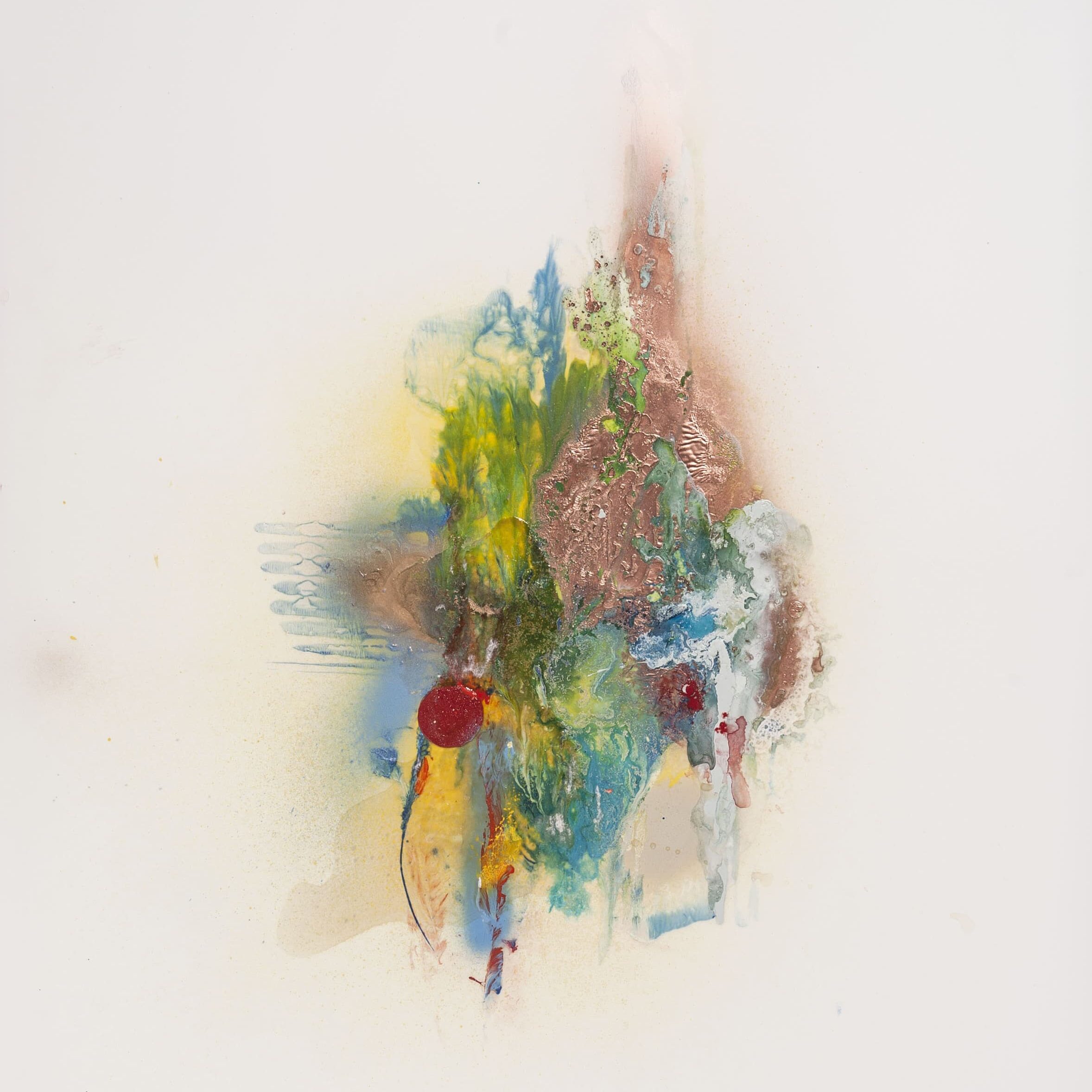
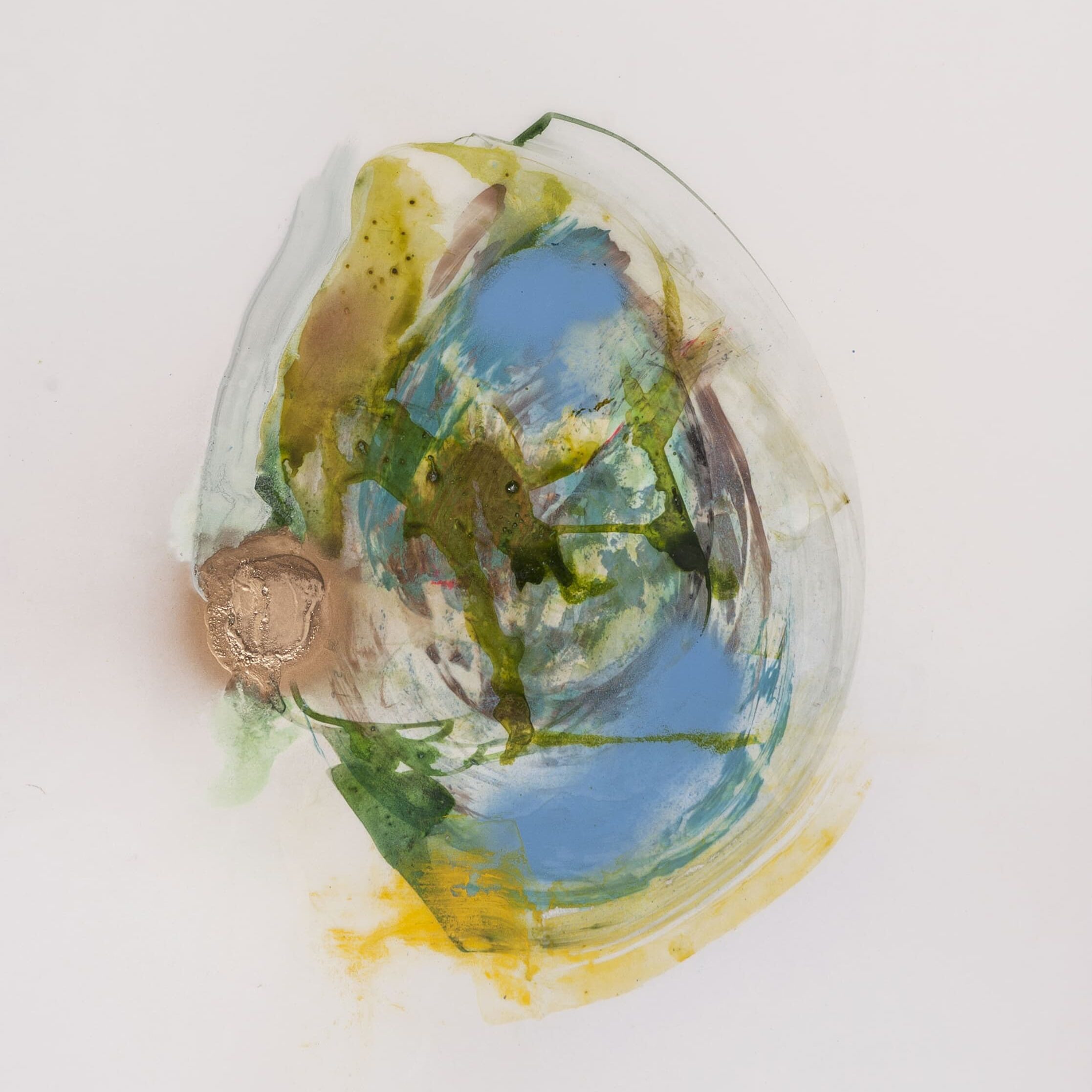
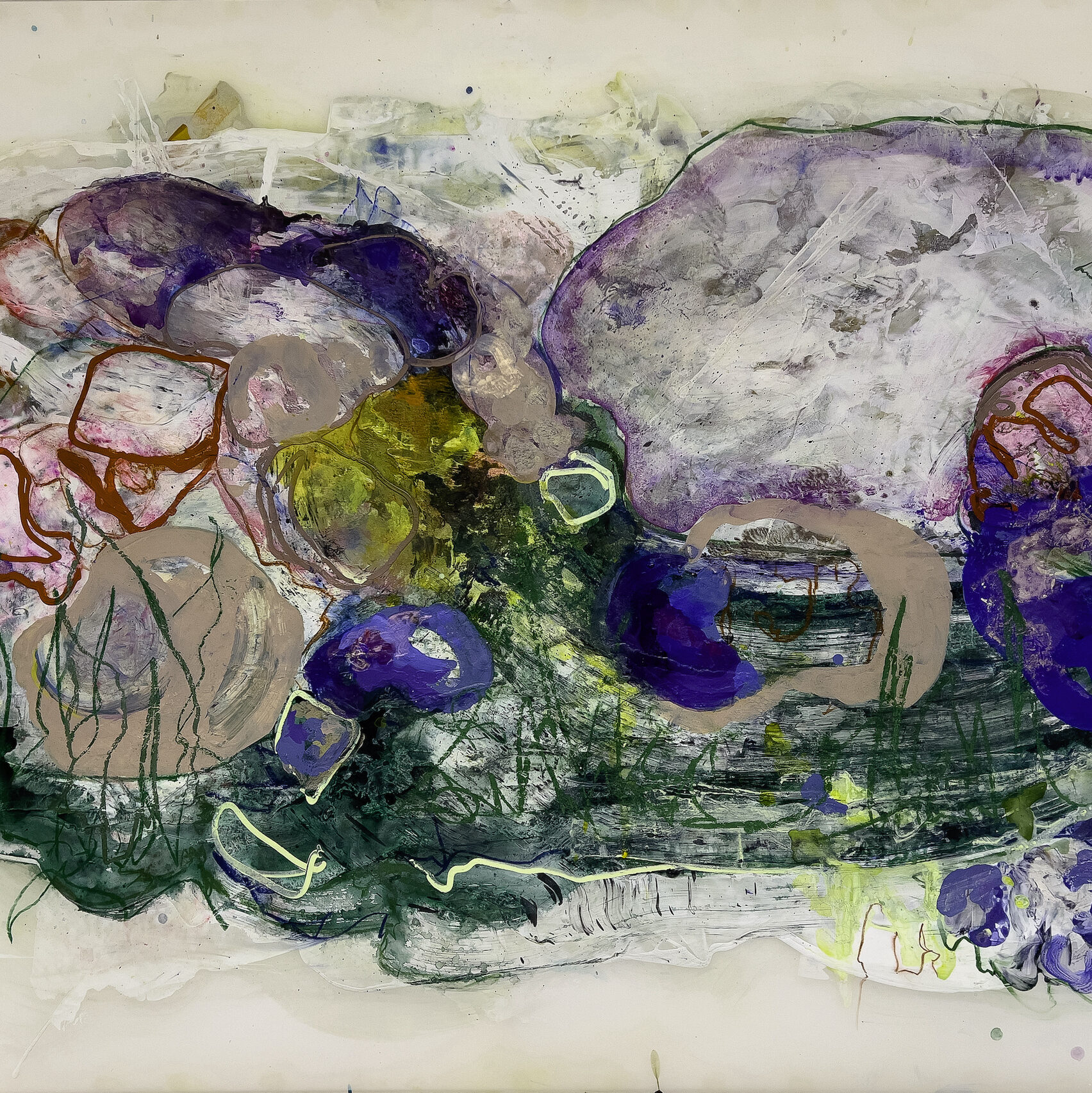
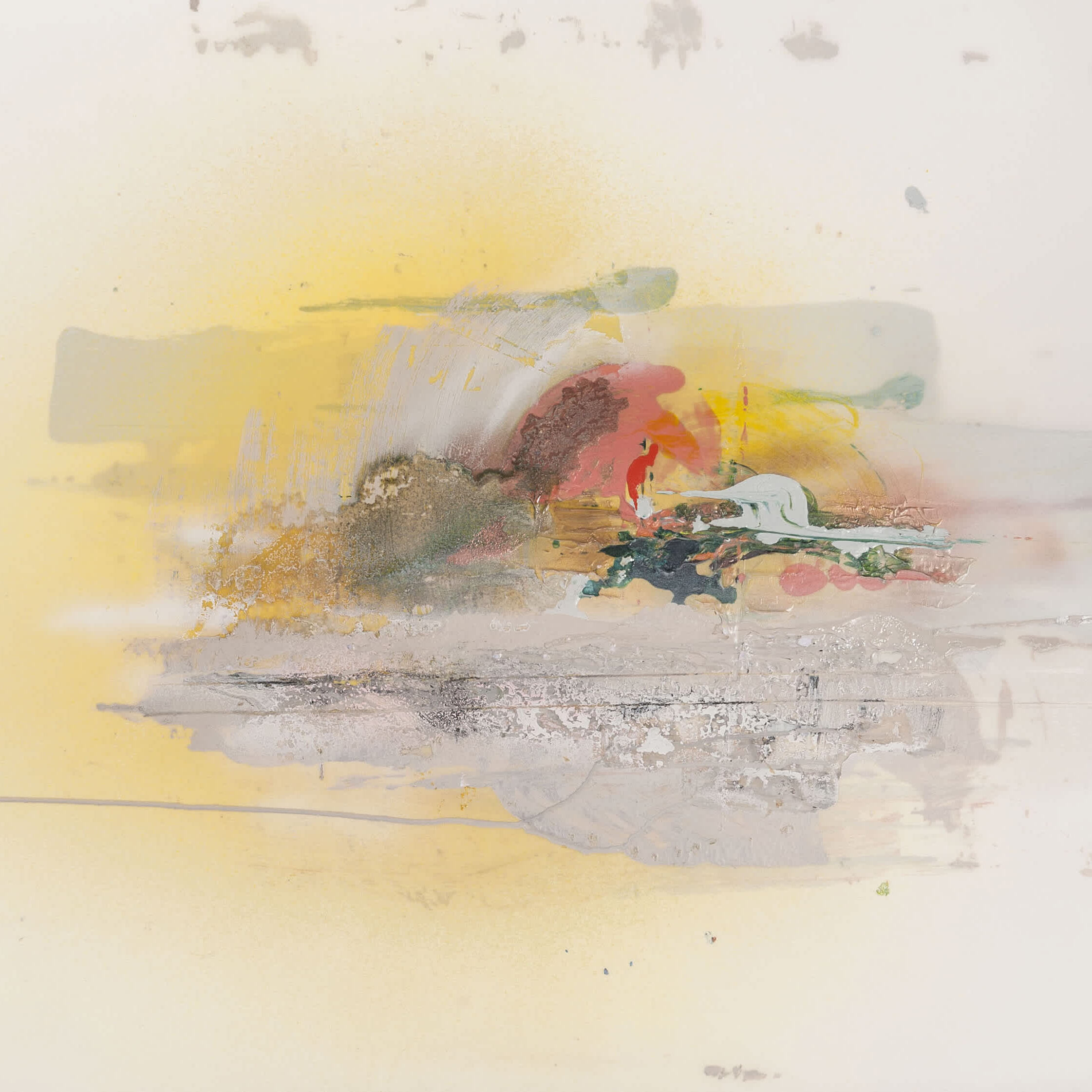
English painter and designer, Catherine Chesters, virtually sat down with us to discuss her artistic background, how she creates her work, and what inspires her to make art. Chesters reimagines her observations of nature, the mundane and the discomfort of existence into abstract, escapist imagery. Using a combination of screen-printing techniques, a strong sense of color, and cultural communication, Chesters creates rich abstract compositions that deny figuration and geometry. Her vibrant abstractions exist amid the pure expanse of paper like moments of the ineffable made visible through color.
CBCA: What’s your background? Did you always want to be an artist?
CC: I trained in design and spent many years working professionally in that world, so I have a strong foundation in composition and visual structure. Creativity has always been part of my life, but I didn’t fully claim being an artist until more recently. It really shifted when I committed to having a studio and giving myself the space to explore without a brief or outcome attached. That changed everything.
CBCA: What excites you to make your work? Why do you make art?
CC: I’m drawn to that moment where something starts to appear before I fully understand it. It’s not planned—it’s more like following a thread and seeing where it leads. At the core, I’m a seeker. I’ve always felt there’s more shaping us than what we can see or explain. Not just culture in the obvious sense, but something quieter—like a frequency or energy that moves through us. Making work is a way for me to tune into that and give it some kind of form, even if I don’t fully understand it myself.
CBCA: How do you begin a work? Do you research? If so, how?
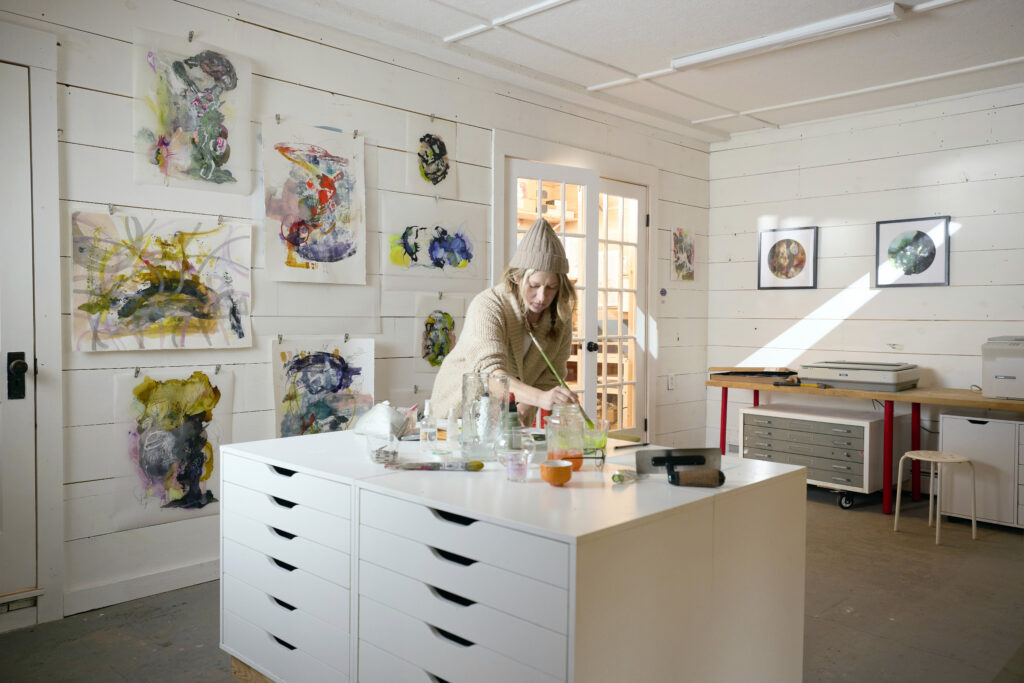
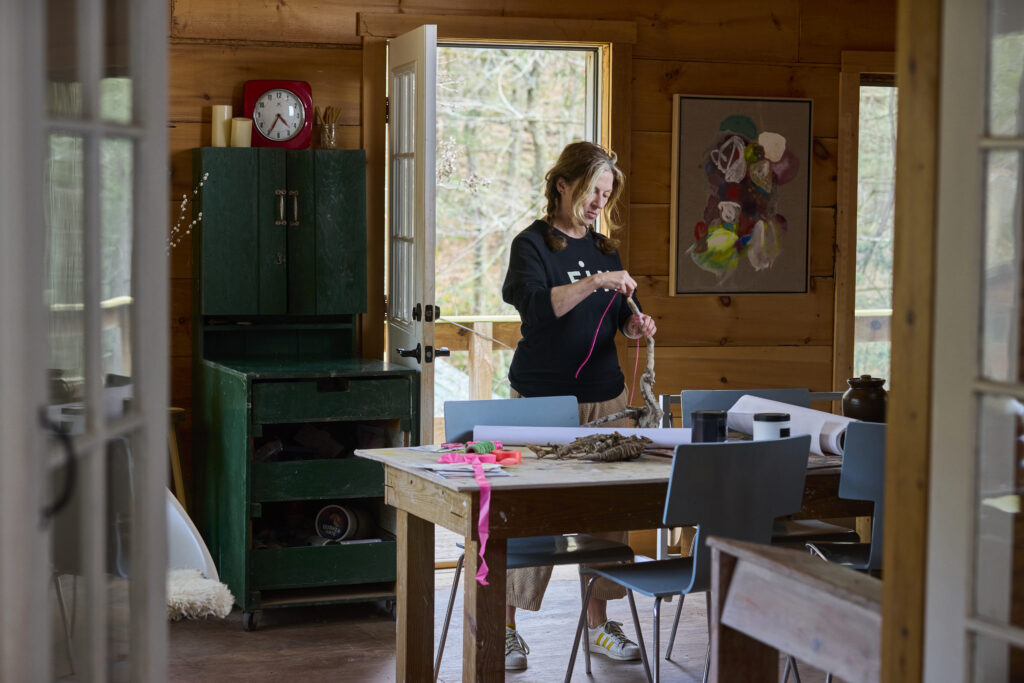
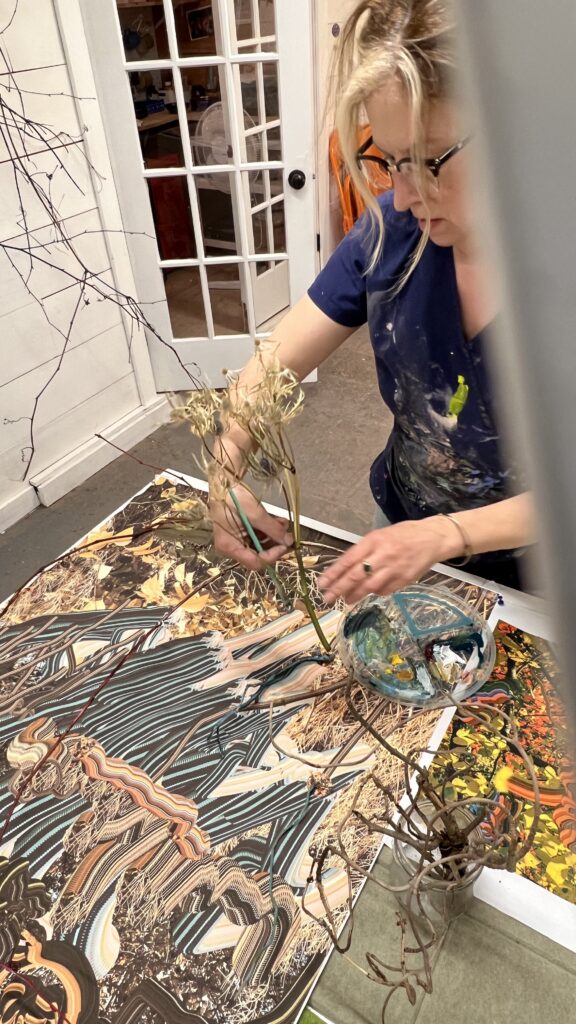
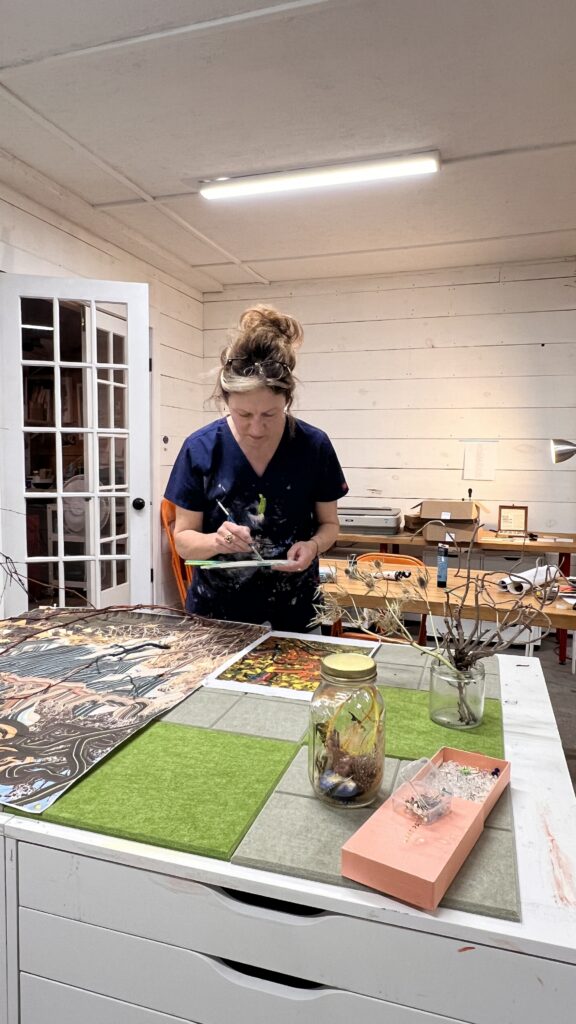
CC: I usually start by noticing something—forms in nature, textures, small details that catch my attention. I’ll photograph them or collect fragments, not to copy them, but to hold onto something that feels important. From there, the work moves between digital and physical. I might scan, layer, pull things apart digitally, and then bring it back into painting or collage. It’s a back-and-forth process. I do follow research, especially around natural systems like fungi and networks beneath the surface, but it’s not about illustrating that. It’s more that those ideas sit in the background and influence how I build the work.
CBCA: What informs your work? What themes do you pursue?
A lot of it comes from thinking about what shapes us—internally and externally—and how much of that isn’t visible. I’m interested in the overlap between nature and the human experience. Things like growth, decay, change… but also memory, identity, and how everything layers over time. There’s always a sense that something is happening beneath the surface, and the work is trying to get close to that without fully explaining it.
CBCA: Is there a reason you use different mediums for different pieces?
CC: I actually resisted digital work for a long time because I’d spent so many years at a computer. I wanted to get back to something more physical. But the work kind of decides. If I see something in nature that I need to capture, I’ll photograph it, and then I’m already in a digital space. From there, it just becomes part of the process.
There’s also a more subconscious side to it. Certain materials seem to hold different things, and I don’t always know why. I just follow it.
CBCA: How has your work progressed? How has your practice changed over time?
CC: When I first started painting, it felt like falling in love. There were no rules, no training—I just followed instinct and worked with whatever I had. I’d go to the hardware store, buy materials, mix things into paint… it was very open and experimental. That part of me hasn’t changed. I’m still a seeker—that’s probably the most consistent thing in my work.
There’s also a deeper layer in the work now—something more subconscious, an underbelly that comes through without me forcing it. I’ve learned to trust that instead of trying to control it. It feels less like experimenting for the sake of it, and more like uncovering something that’s been there all along.
Catherine Chesters
Catherine Chesters
Catherine Chesters
Catherine Chesters
Catherine Chesters
Catherine Chesters

